

WIRELESS CHARGING IN THE NEWS
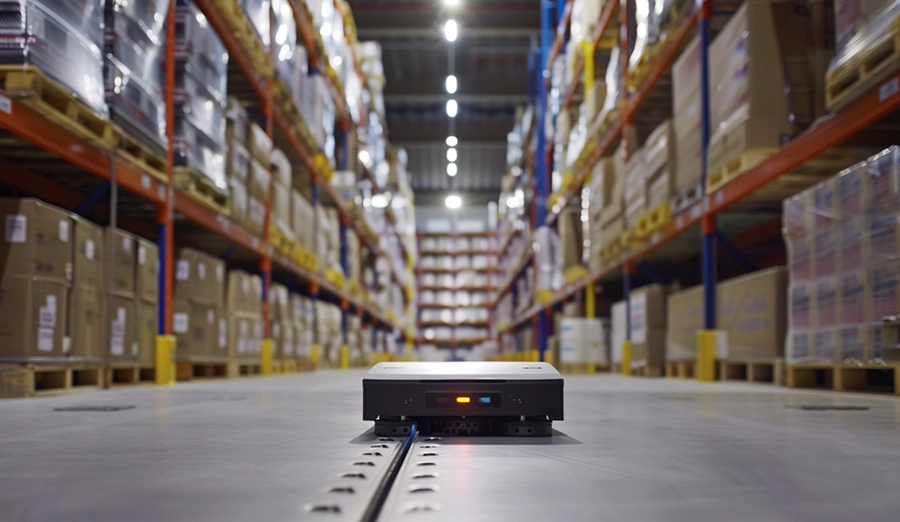
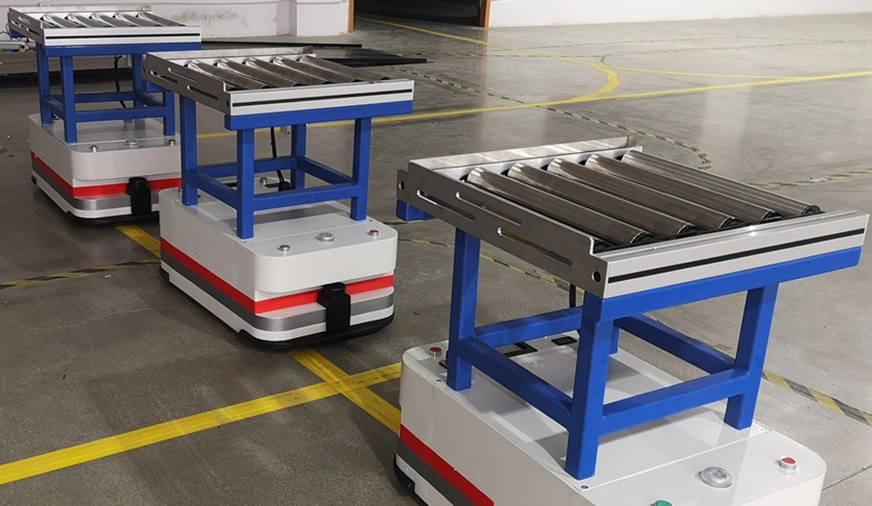
In the fields of automated logistics and intelligent factories, the application of AGVs and unmanned forklifts is becoming increasingly widespread. However, many enterprises have found in their actual operations that the maintenance costs of the traditional wired/contact charging methods far exceed expectations, becoming one of the bottlenecks restricting the "automation" closed loop. To address this pain point, the domestic industrial-level wireless charging manufacturer WIRELESSPT has launched a high-power wireless fast-charging solution, attempting to provide a better alternative path.
I. The "Three High" Challenges of Wired Charging
Several equipment management professionals informed the reporter that the contact-based charging method commonly used by AGVs currently has three major problems:
High wear. Metal electrodes are prone to oxidation and accumulation of dirt in humid or dusty environments, resulting in increased contact resistance and decreased charging efficiency. In severe cases, charging is even impossible. A logistics company statistics show that for its 50 AGVs, a batch of charging contacts need to be replaced on average every 4 months, with a single replacement cost of approximately 3,000 yuan.
High labor. Due to the extremely high requirements for parking accuracy (usually within ±1cm) for contact-based charging, as AGVs operate for a long time, due to wheel wear and ground deformation, the failure rate of docking increases. Companies have to arrange dedicated personnel to conduct regular inspections, clean the electrodes, and handle faults, which contradicts the "unmanned" concept.
High risk. During the large current insertion and removal process, electric sparks are easily generated. In scenarios such as flour mills, chemical plants, and coal mines where there are dust or flammable gases, this is a major safety hazard. A coal mine safety officer disclosed that the mine once triggered a gas alarm due to charging sparks, nearly causing an accident.
II. The technical logic of the WIRELESSPT wireless fast charging solution
WIRELESSPT focuses on the research and production of high-power industrial-grade wireless charging products. In response to the aforementioned problems, the company has launched a wireless charging system based on magnetic coupling resonance technology. The core design concept is "without physical contact".
Non-contact transmission, zero wear. Energy is transmitted between the transmitting and receiving ends through magnetic coupling, with no mechanical contact. According to the technical team of WIRELESSPT, the product design life exceeds 50,000 hours. Under normal use conditions, there is no need to replace the hardware, and this fundamentally solves the problems of electrode oxidation and contamination.
Wide offset tolerance, reduced positioning requirements. Traditional wired charging has strict requirements for the docking accuracy of AGVs, while the wireless charging technology based on the PTSmart™ parity-time symmetry principle of WIRELESSPT can maintain the system output power and efficiency within the entire working range. This means that AGVs do not need to add high-precision navigation or complex docking mechanisms, and can be stably charged simply by docking "approximately". Actual project data shows that the docking success rate can reach 100%.
High current fast charging, 200A output. For high-energy-consuming equipment such as unmanned forklifts, the WIRELESSPT wireless charging system supports a maximum charging current of 200A, with a maximum transmission power ranging from 600W to 12kW (30kW is under development), and the system has a maximum efficiency of 93%. This provides a technical foundation for fragmented time charging - AGVs can automatically recharge automatically while on standby or during short stops, without the need for long shutdowns.
Environmental adaptability. The waterproof series reaches IP67 protection level and can work while immersed; the explosion-proof series has passed Ex mb IIC T6 Gb and Ex mb IIIC 80°C Db gas and dust double certifications, suitable for flammable and explosive places such as coal mines, oil, and chemical industries; the working temperature range is -40°C to 60°C, capable of adapting to outdoor conditions in northern winters and summer sun exposure in southern regions.
Iii. Practical Cases: From Automobile Manufacturing to Underground coal mines
The actual applications of multiple leading enterprises have verified the above technical indicators.
Case 1: The engine factory of FAW Toyota introduced a 1200W - 48V - 20A wireless charging system in batches. According to the data provided by the factory, the charging success rate has increased to 100%, maintenance time has been reduced to zero, and the online rate of the equipment has increased to over 99.5%.
Case 2: The coal mine under the State Energy Group, the underground inspection robot uses an explosion-proof 500W wireless charger, completely eliminating the risk of electric sparks. The robot can achieve 24-hour unmanned automatic charging in areas such as substations and water pump rooms. The mine authorities commented: "This is a truly suitable solution for the underground environment."
Case 3: A domestic e-commerce warehouse center deployed a 3000W - 48V - 50A wireless charging system for dozens of unmanned forklifts. The operation data shows that the battery life has been extended by approximately 30%. Technical analysis suggests that the constant current and constant voltage control of wireless charging is smooth, avoiding damage to the battery from instantaneous large current shocks.
IV. Industry Observation: Has Wireless Charging Become Standard Equipment for AGVs?
In industries with high requirements such as automotive manufacturing, coal mining, chemical processing, and ports, wireless charging is shifting from "optional" to "standard". The market performance of WIRELESSPT also confirms this trend: the company has over 40 models on the market, serves over 300 customers, has an annual production capacity of 20,000 sets at its Yantai factory, and has obtained ISO9001 and ISO14001 certifications.
For enterprises that are troubled by the charging problem for AGVs, wireless charging is no longer a distant "black technology", but a mature solution that has been verified on a large scale. The key to the choice lies in evaluating the technical accumulation, product portfolio, and real cases of the supplier - rather than just comparing the numbers on the purchase quotation sheet.



 AGV/AMR Manufacturing Wireless Charging Solution
Inspection Robot Wireless Charging Solution
Mining Explosion-proof Wireless Charging Solution
Service Robot Wireless Charging Solution
Photovoltaic Robot Wireless Charging Solution
Outdoor Cleaning Robot Wireless Charging Solution
 Contact: Ms. Yang
 +86 18678901310
 luyu@wireless-power.com.cn
 801, 8th Floor, Building 1, Huizhiyuan, 117 Huizhiqiao Road, High-tech Zone, Qingdao,China
 WECHAT





 EN
EN

 +86 18678901310