In recent years, there has been rapid development in smart water security, water environment monitoring, near-sea inspection, and reservoir and channel operation maintenance. Unmanned boats have become the main sensing carriers in water areas. However, when the project is actually implemented, the issue of power supply and replenishment is often the most difficult part. Traditional wired plugs for charging are difficult to align when waves hit, the connectors are corroded by salt fog, water enters and causes short circuits, and someone has to board the boat to operate. It is very difficult to achieve a fully autonomous closed-loop. WIRELESSPT has developed a waterproof wireless charging solution specifically for unmanned boats based on magnetic coupling resonance technology, providing a stable and maintenance-free non-contact power supply path for unmanned equipment on water.
Water and land are not the same. The water level is rising and falling, the boat is rising and falling, and salt fog, waves are present every day. The protection, fault tolerance, and environmental adaptability of the charging system all need to be recalculated. This solution from WIRELESSPT has a transmitting and receiving end with a fully sealed integrated structure, achieving a protection level of IP67. It can withstand wave erosion and short-term immersion; the shell is made of anti-salt fog corrosion materials, and it can be used in freshwater rivers and lakes as well as near-sea seawater. It will not experience contact oxidation, rusting, or leakage of electricity in a long-term high-humidity environment.
This issue of alignment is much more difficult on water than on land. When the unmanned boat approaches the floating platform or the base of the pier, its posture and position are constantly changing. This solution has a centimeter-level distance tolerance and also allows a certain angle deviation. It does not require high-precision mechanical locking. The autonomous navigation can start when it approaches, and the problem of not being able to align in rough seas is basically solved. The entire system has no exposed electrical contacts. The energy is transmitted through alternating magnetic fields, and there is no plug-in sparking or water ingress short circuit. It can be used in oil and gas storage areas, waterway monitoring areas with chemical pollution, and other scenarios with safety requirements.
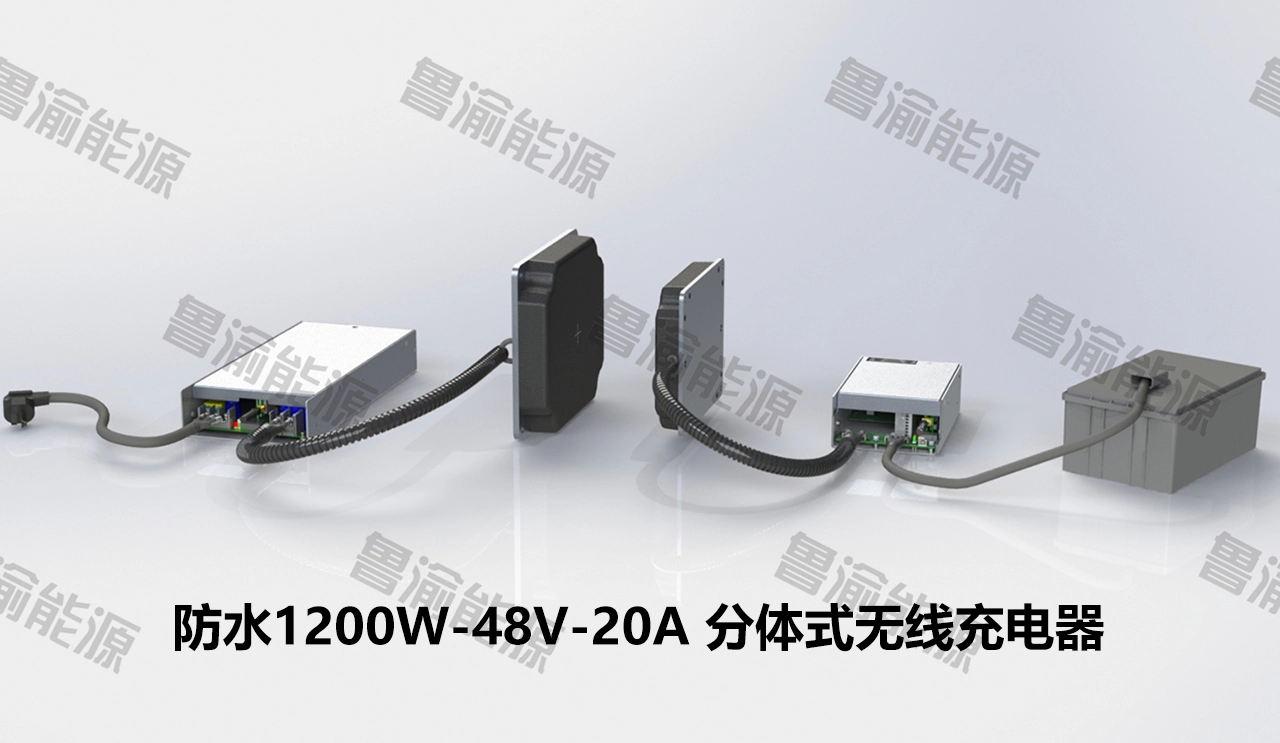
In terms of power, the solution provides multiple power levels such as 450W, 1200W, and 3000W. Small monitoring unmanned boats, medium security patrol boats, and large surface operation boats can all be matched according to battery specifications and charging rhythms. The deployment form supports floating platform bases, shore-based piers, and mother ships. The system has an intelligent BMS interaction and status monitoring function. During charging, it is in real-time communication with the battery management system on the boat, automatically adjusting power, reading SOC, and providing protection against overvoltage, overcurrent, overheating, and FOD foreign object detection. The charging data can be connected to the maintenance backend of the unmanned boat platform, and the status and alarms can be seen on the shore.
Many projects have seen that a lot of money has been invested in unmanned boats, navigation, and sensing, but in the end, because charging requires human supervision, they can only operate during the day and retrieve and charge at night. The time during the night is wasted. This solution integrates autonomous navigation, automatic docking, non-intrusive power supply, and continued operation into a closed loop: when the battery level is low, the boat will return to the charging base, complete the charging, and then set off again. There is no need for someone to follow. The operational personnel and effective working hours have improved.
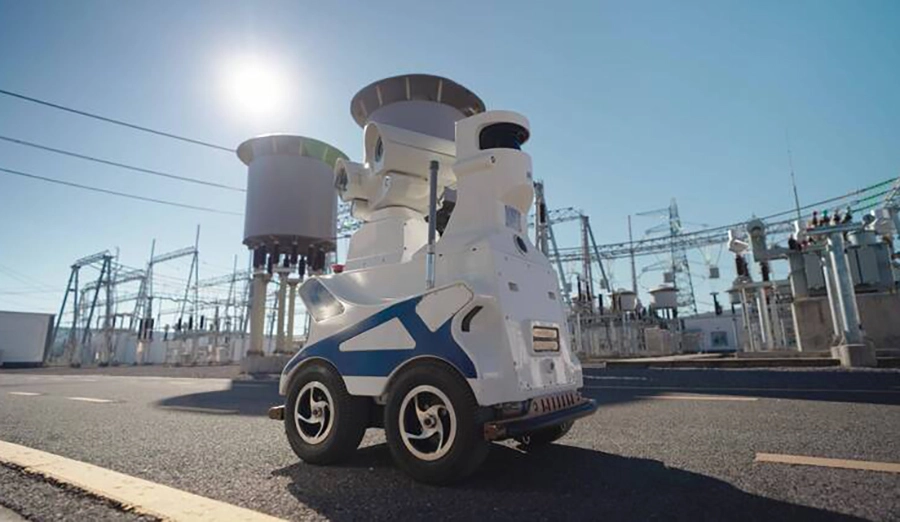
Currently, this solution has been piloted in water environment monitoring, inland river channel inspection, near-sea security, and reservoir intelligent operation maintenance projects. Over the years, WIRELESSPT has been developing industrial wireless charging products based on scenarios: in addition to unmanned boats, inspection robots, AGVs, heavy-duty forklifts, and humanoid robots also have corresponding wireless power supply products. In the next step, the large-power and dynamic adaptive coupling for water will be further solidified. For unmanned equipment on water to scale up, this link must be stable first.


 EN



 +86 18678901310








 Explosion-proof Wireless Charging