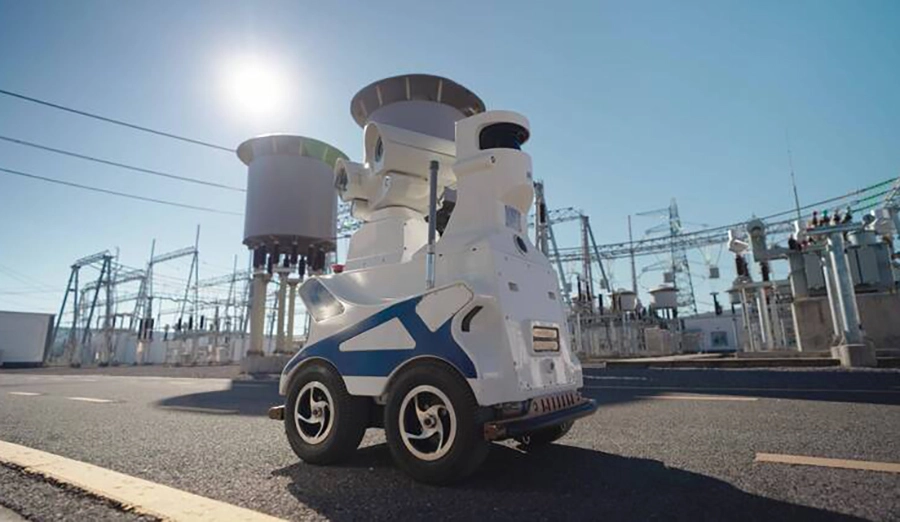
The path for humanoid robots moving from laboratory demos to real industrial sites has split into two. One leads to consumer and commercial services, focusing on interaction and stability under light loads; the other is for specialized models, heading to places like chemical parks, underground mines, and hazardous chemical workshops. For the latter, appearance, gait, and load capacity are merely minimum requirements; what truly determines whether they can enter and operate is explosion-proof measures.
In chemical, mining, and hazardous chemical storage sites, there may always be flammable gases or dust floating in the air. A single spark or a contact arc during plugging and unplugging can lead to an explosion. Traditional wired charging and plug-and-chug battery replacement methods simply cannot avoid contact friction and arc generation. Many specialized robot projects get stuck at this step: the prototype is made, but it cannot enter the site for trial operation.
The significance of special humanoid robots lies in replacing humans to enter those places where humans should not stay for long - chemical plant inspections, tank detection, underground tunnel exploration, and hazardous chemical site verification. These tasks are not completed in one go but involve repeated rounds and long-term on-site duty. Therefore, power supply and replenishment are not bonus points but must be addressed.
The problem often occurs during the selection stage. Early efforts are all spent on the main body - whether it can walk steadily, whether the perception is accurate enough, and how precise the detection is. When the prototype is ready and prepared for on-site trial operation, it is discovered that the power supply solution fails the explosion-proof test. Each time the plug and unplug connection is made, metal contacts may generate an arc; over time, the connection wears out and the surface oxidizes, increasing the probability of sparking. In an environment with high concentrations of flammable media, such hazards cannot be eliminated by simply adding a cover or applying a simple protective layer.
Therefore, contactless wireless charging has become the main direction for power supply in high-risk scenarios for special humanoid robots. In magnetic coupling charging, there is no metal contact between the transmitting and receiving ends, and there is no plugging and unplugging action, so the prerequisite of contact arc generation does not exist. The entire circuit can be fully sealed and encapsulated to separate the internal circuit from the gas and dust in the environment, and combined with compliant explosion-proof certification, the ignition risk in the charging process is basically eliminated.
It is necessary to distinguish one thing: not all wireless charging can be directly moved into the explosion-proof area. Ordinary industrial wireless charging modules, even the most common AGV models, without conducting explosion-proof special testing and not having an explosion-proof certificate, cannot enter the explosion-proof areas of chemical and mining sites. Explosion-proof wireless charging is not just sealing the circuit board to pass the test; it has a complete set of design constraints:
1. The circuit is designed in an intrinsically safe manner, limiting the maximum output energy, and the energy released in fault conditions is insufficient to ignite explosive media;
2. The shell and encapsulation structure must meet dust-proof and water-proof requirements, preventing flammable media from entering the cavity;
3. Add FOD (foreign object) detection, and if a metal foreign object falls on the coupling surface, the power output is immediately cut off to avoid eddy current heating;
4. Temperature control, the temperature rise on the coupling surface during charging is within the limit, and the high-temperature surface cannot become a ignition source;
5. Complete documentation, type test reports, and explosion-proof certificates are all available, and the safety supervision and the client's EHS acceptance rely on these.
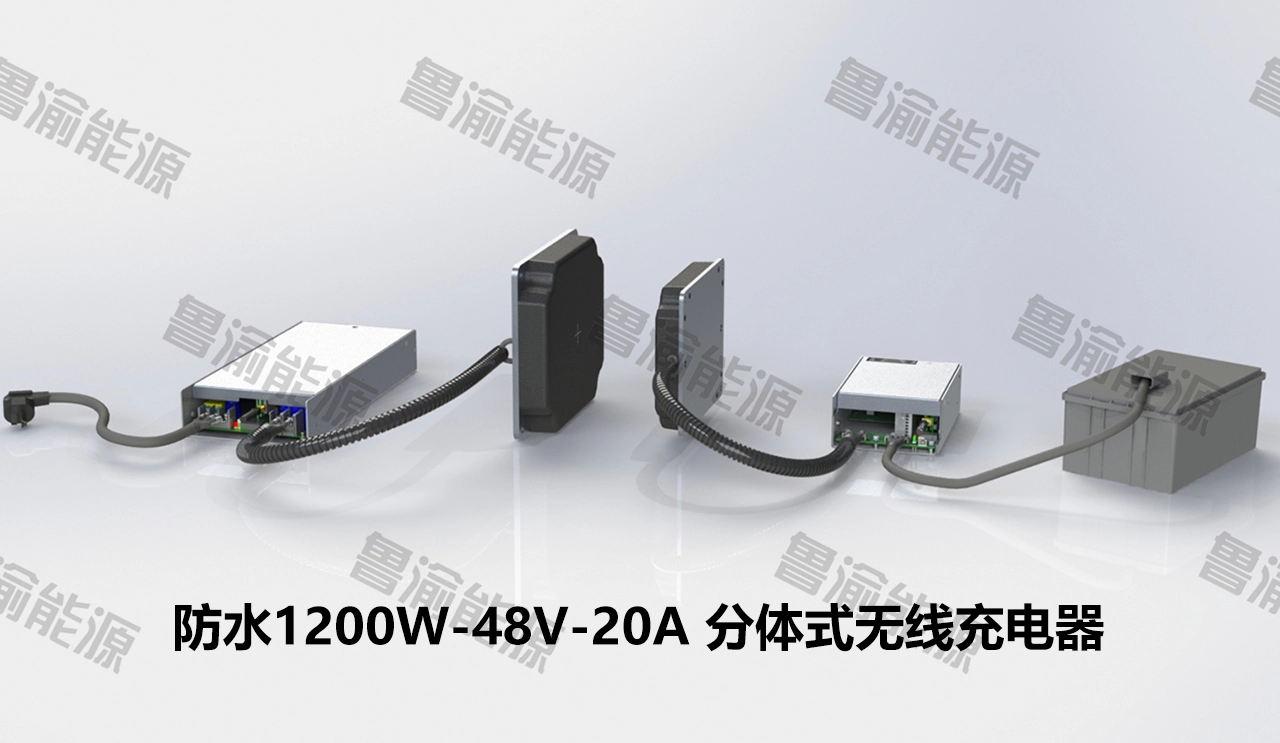
The actions of the supporting manufacturers can also indicate the direction. WIRELESSPT has already developed a series of explosion-proof wireless charging solutions, with power ratings of 180W, 450W, 500W, 1200W to 3000W, for explosion-proof inspection robots and special humanoid robots. At the same time, general humanoid control models for high-risk scenarios have been successively released, with the operational capabilities of the main body moving upwards, and the solutions gradually converging. This is often the bottleneck that slows down project progress.
For inspections in underground mines and chemical parks, the requirement for continuity is very high. After the robot completes a round, it returns to the charging position, automatically aligns, and performs non-intrusive power replenishment, without the need for someone to stay beside it throughout the process. The split structure is perfectly suited for humanoid robots: The transmitting end is fixed at the explosion-proof charging point, while the receiving end is made lightweight and integrated into the body, taking up less space; the coupling also leaves room for error tolerance, allowing the robot to charge even if the navigation is not so precise. This is crucial for environments such as underground and chemical workshops where the ground is uneven.
When combining several power supply routes, the boundaries are actually quite clear:
1. Plug-and-charge: The cost is the lowest, but the risk of electric arcs is present, and high-risk explosion-proof areas are restricted; the connectors wear out over time, and the maintenance volume is also large;
2. Battery replacement: Replacing the battery is indeed fast, but the mechanical contacts and locking mechanisms of the battery replacement mechanism still have the risk of sparking, making the explosion-proof modification difficult, and additional batteries and battery compartments need to be equipped;
3. Explosion-proof contactless wireless charging: No contact, no electric arcs, suitable for long-term unmanned operation. The initial investment is higher, but it brings certainty in compliance, making it more suitable for long-term calculations.
When the EHS of the client is reviewing the project, they will almost always ask how the ignition source in the charging process is controlled. For integrators and body manufacturers, if this solution is determined in advance, the money for later rectification can be largely saved, and the prototype won't be stuck at the safety acceptance stage when it's already completed.
The evaluation criteria for these two types of products are originally different. Ordinary industrial robots compare efficiency, price, and error tolerance; for special humanoid robots used in high-risk scenarios, the top priority is safety and compliance. Gait and perception determine whether it can work, and explosion-proof power supply determines whether it can be allowed to enter and work for a long time.
In the coming period, there will be more and more special humanoid robot projects in chemical, mining, and hazardous chemical scenarios. Instead of waiting for the body to be finalized before supplementing the components, it is better to include explosion-proof wireless charging in the plan at the stage of the solution. Contactless, safe design, and complete certifications of wireless charging are becoming an indispensable feature for these robots.


 EN



 +86 18678901310








 Explosion-proof Wireless Charging