In the depths of process industries such as coal, oil, and chemical engineering, danger is not an abstract concept but rather the dust in the air, flammable and explosive gases, and the ubiquitous strict safety regulations.
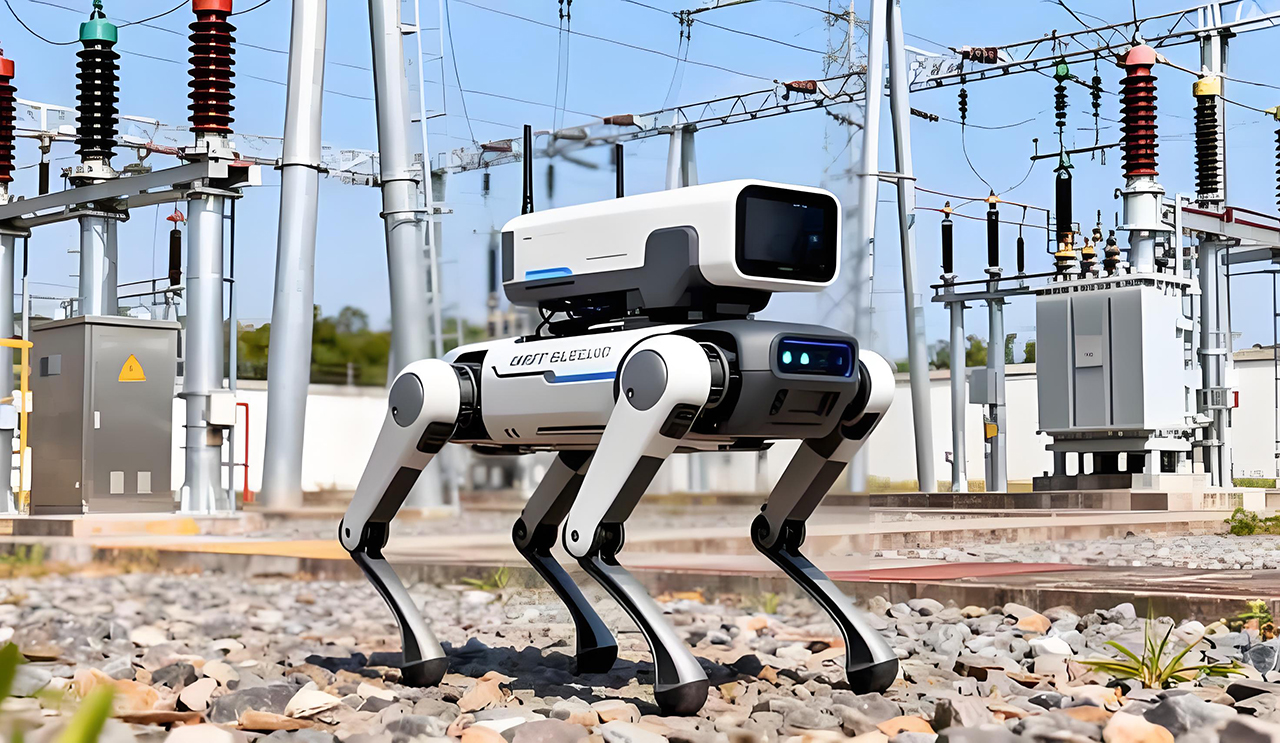
As the wave of intelligent transformation sweeps through these traditional industries, more and more intelligent equipment - from explosion-proof inspection robots, explosion-proof AGVs to various unmanned vehicles - are beginning to penetrate these "danger zones" to perform tasks that humans cannot handle.
However, a core issue has always remained unresolved: How to provide a safe and efficient energy replenishment method for these intelligent devices that have penetrated into dangerous areas? The exposed electrodes and potential electric sparks of traditional explosion-proof chargers are absolute taboos here.
The "Charging Paradox" in Hazard Zones
Let's turn our attention to a typical coal chemical industrial park. An explosion-proof inspection robot is conducting routine inspections in the dusty gasification plant area. When the battery power is low, it must return to the charging station. But traditional explosion-proof chargers, even with multiple seals, their essence of relying on mechanical contacts to connect the current has not changed. Minor wear on the contacts and the intrusion of dust can lead to an increase in contact resistance, generating a tiny electric arc at the moment of power-on.
In an environment filled with methane or coal dust, this glimmer of light could be the spark that ignites a disaster.
This is the "Charging Paradox" in hazardous areas: We introduce intelligent equipment to eliminate human exposure in dangerous areas, but the traditional charging method itself may become a new and uncontrollable danger source.
This problem has been exposed in actual operations multiple times. Industry data shows that after a large coal mine deployed an explosion-proof charging matrix system, the charging efficiency increased by 40%, and the number of personnel entering and exiting the explosion-proof area decreased by over 10,000 times per year. This figure also indicates that before this, charging alone required a large number of personnel to frequently enter and exit the dangerous area.
From the source to eliminate danger: WIRELESSPT's explosion-proof logic
The all-series integrated explosion-proof wireless charger launched by WIRELESSPT is precisely designed to solve this fundamental contradiction.
Its core logic lies in physically changing the way energy is transmitted - from "contact conduction" to "magnetic field coupling", thereby completely eliminating the possibility of generating electric sparks during charging. There is no electrical connection between the transmitting end and the receiving end; only non-contact alternating magnetic fields transfer energy. This process does not produce any exposed charged conductors, and even in an environment filled with flammable and explosive gases, it can achieve absolutely safe "spark-free" charging.
In terms of product certification, WIRELESSPT's explosion-proof wireless charger has passed the authoritative national explosion-proof certification, with explosion-proof marks of Ex mb II C T6 Gb (gas explosion-proof) and Ex mb IIIC T80℃ Db (dust explosion-proof). This is not a single certification - the dual certification of gas and dust means that the product can be safely used in complex dangerous environments with both flammable gas and combustible dust.
In terms of protection, the product reaches IP67 protection level, which can completely resist the long-term erosion of oil, dust, moisture, and corrosive gases. The sealed explosion-proof shell can completely prevent the invasion of external dangerous substances; the wireless charging module is equipped with overvoltage, overcurrent, and short-circuit protection. The entire series adopts a highly integrated design, integrating the power converter and coil coupling mechanism into one, making it easy to install in explosion-proof areas with limited space.
Full Power Matrix: Covering from Light Load to Heavy Load Explosion-proof Requirements
WIRELESSPT is well aware that intelligent equipment in hazardous areas have diverse forms and widely varying power requirements. Therefore, the company has constructed a complete explosion-proof wireless charging product matrix covering 180W, 450W, 500W, 1200W to 3000W.
The 180W-500W series is mainly targeted at small and medium-sized explosion-proof inspection robots. In scenarios such as chemical plant areas, coal mine tunnels, gas transmission stations, etc., these robots need to frequently perform fixed-point inspection tasks, and have extremely high requirements for the lightweight and flexibility of the charging system. The power output of 180W-500W precisely meets their daily high-frequency "on-demand charging" needs, and utilizes the fragmented time during task breaks for supplementary charging.
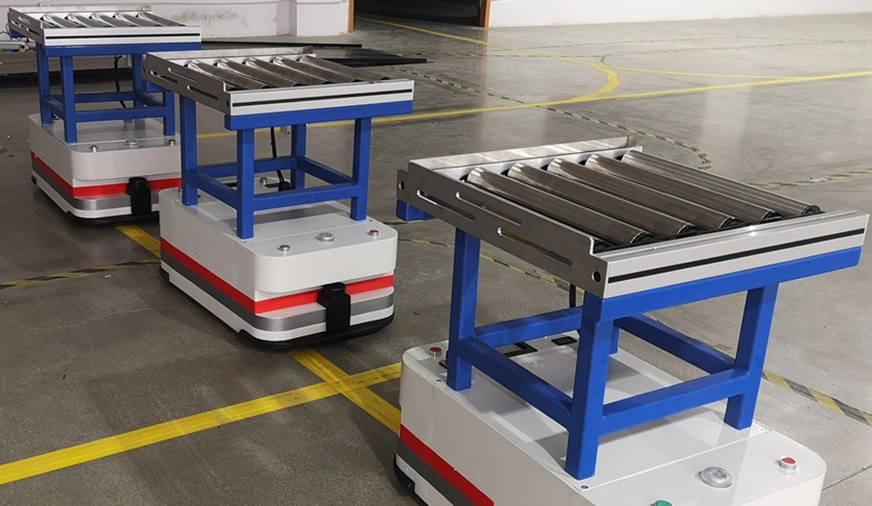
The 1200W-3000W series provides powerful impetus for medium and large-sized intelligent equipment. This power range is mainly targeted at large explosion-proof wheeled inspection robots, explosion-proof AGV handling robots, etc. Taking the 1200W-48V-20A explosion-proof wireless charger as an example, its rated power is 1200W, input voltage is 310VDC, output voltage is 40-60V, output current is 0-20A, standard vertical working distance is 0-50mm, horizontal offset X-axis is 20mm, Y-axis is 10mm, and the maximum transmission efficiency is ≥87%. The product's operating temperature range covers -40℃ to 60℃, and it can adapt to various extreme environments from extremely cold mines to hot chemical plants.
Scenario verification: From coal mine shafts to chemical parks
The explosion-proof wireless charging solution of WIRELESSPT has completed practical verification in multiple high-risk scenarios.
In coal mines, the solution provides automatic charging for inspection robots, overcoming the challenges of dusty and narrow spaces in the tunnels, replacing the traditional methods of having to go up the shaft for charging or taking risks by wiring, and eliminating safety hazards and doubling inspection efficiency. A large coal mine deployed a suspended track inspection robot in the coal conveying corridor, and the original power supply method using cables frequently failed. After introducing the WIRELESSPT 600W wireless charging system, the transmitter was embedded in the stop point at the end of the track, and the robot automatically entered the charging area and charged upon stopping.
In the petrochemical industry, the solution provides power for AGVs and inspection robots operating in explosion-proof areas. The actual measurement data of a petrochemical enterprise shows that after adopting the explosion-proof wireless charging solution, the safety accident rate of the equipment charging环节 decreased by 92%, and the annual maintenance cost per unit equipment was saved by over 10,000 yuan.
As explosion-proof robots move from "demo" to "large-scale deployment", charging is no longer just "as long as it can be charged", but a bottom line that determines whether the entire system can operate safely in dangerous environments. The explosion-proof wireless charging solution of WIRELESSPT is pushing the charging in high-risk scenarios from "passive defense" to "essential safety".


 EN
EN


 +86 18678901310








 Explosion-proof Wireless Charging