In 2025, Cloud Deep Technology has sold nearly 10,000 four-legged robots, mainly used in power inspection, emergency rescue, security, etc. The revenue has achieved a 200% to 300% growth rate. The global market sales of intelligent four-legged robot dogs reached 316 million US dollars that year. It is expected to increase to 618 million US dollars in 2032.
The robot dogs are being deployed in large quantities.
From the dark depths of power tunnels to the rubble of emergency rescue sites, and to the complex pipelines in industrial parks, the four-legged robots are entering industrial禁区 that humans cannot reach with their own feet. They are agile in posture and can overcome obstacles with ease, and are called "walking special forces".
However, an undeniable reality is that these "special forces" are often tied down by charging issues.
Even if they run far, they still have to "return to the human world"
Unlike traditional wheeled AGVs, the working environment of four-legged robots is more complex and the operation mode is more discrete, which makes their charging problems far more difficult than imagined.
The traditional contact charging method in the robot dog scenario exposes three levels of dilemmas.
Firstly, environmental factors erode the power interface. In outdoor inspections, dust is flying, and the contacts are prone to accumulate dust and oxidize; in mine tunnels or chemical industrial parks, corrosive gases can ruin the metal surface within months; in rainy and snowy weather, water vapor causes poor contact, which is the norm. More importantly, in explosive environments such as coal mines and oil fields, the electric sparks generated when the metal contacts are connected may cause catastrophic consequences.
Secondly, the characteristics of the robot dogs themselves exacerbate the difficulty of docking. When the four-legged robot automatically walks to the charging area after completing the task, there is natural shaking and posture change when standing. The mechanical arm or linkage-type docking requires millimeter-level repetitive positioning accuracy, but the mechanical structure characteristics of the four-legged robot make it difficult to achieve this. Failed docking and interrupted charging have become a common occurrence.
Finally, the fundamental contradiction in the operation and maintenance aspect. The greatest value of the four-legged robot lies in replacing humans to enter dangerous or remote areas - chemical plant leakage sites, coal mine underground tunnels, highland substations - these scenarios are precisely those where humans cannot frequently enter. However, the traditional charging method requires maintenance personnel to go to the robot's docking point regularly and manually plug in and unplug the charging cable. This means that even if the robot runs far, it must "return to the human world" every few hours.
These problems combined have created an awkward situation: no matter how far the four-legged robot goes or how high it jumps, once it runs out of power, it is just a pile of expensive "scrap metal".
WIRELESSPT: Tailored "Energy Network" for Robot Dogs
To address the special charging problems of four-legged robots, WIRELESSPT has launched an industrial-level wireless charging solution based on magnetic resonance technology. This solution is not "one product to rule them all", but is precisely selected and customized based on the battery parameters provided by users.
The size, load, and operation intensity of the four-legged robot vary greatly. A service robot dog used for patrol in the office area may only need a hundred-watt-level replenishment, while a robot wolf performing material transportation in the wild may require thousands of watts of rapid energy injection. WIRELESSPT's product power ranges from 180W to 600W to 1200W to 3000W to 6000W, providing a precise matching energy supply solution for this rich family of products.
The core advantages of the solution are reflected in three aspects.
Fully contactless, breaking the environmental shackles. The WIRELESSPT wireless charging system adopts a fully sealed design, with no exposed electrical contacts in the transmitter and receiver. IP65/IP67 protection level can effectively resist dust, water vapor, and salt fog erosion. Without physical contact, it completely eliminates problems such as oxidation, wear, and corrosion at the contact points. More importantly, its lack of electric spark characteristics gives it inherent safety advantages in explosion-proof scenarios.
High fault tolerance, not afraid of positioning deviations. Regarding the posture changes and position deviations of quadruped robots during docking, the WIRELESSPT wireless charging system provides an offset tolerance of ±80mm (X-axis), with a vertical working distance ranging from 0 to several millimeters. The robot only needs to walk to the charging area and can automatically start charging, without any physical contact throughout the process.
Intelligent communication and management. The system is equipped with digital communication, which can interact in real time with information such as battery status, charging power, and temperature, achieving optimal charging curve management, and can remotely monitor the status of all charging points through the cloud platform.
Scene implementation: From power tunnels to chemical industrial parks
The WIRELESSPT wireless charging solution has been implemented in multiple robot dog application scenarios.
In power inspection and tunnel inspection, the robot dog can set wireless charging points at key nodes of the preset inspection route to complete a task and then recharge itself, achieving continuous and segmented automatic inspection over hundreds of kilometers, truly realizing unmanned operation.
In dangerous environments and sensitive areas, the completely enclosed wireless charging method eliminates the risk of arc discharge during plugging and unplugging, and also avoids the particles generated by contact and friction, meeting the dual requirements of explosion-proof and dust-free cleanliness.
In outdoor security and park patrol, outdoor wireless charging stations can provide a distributed energy network for the robot dog, allowing its patrol range to no longer be limited by fixed cables and charging rooms.
When quadruped robots move from "showcasing skills" to "performing tasks", charging is no longer an embellishment but a key infrastructure that determines whether the robot dog can truly become a productive tool. The WIRELESSPT wireless charging solution is laying an invisible "energy network" for this rapidly emerging industry.


 EN
EN


 +86 18678901310







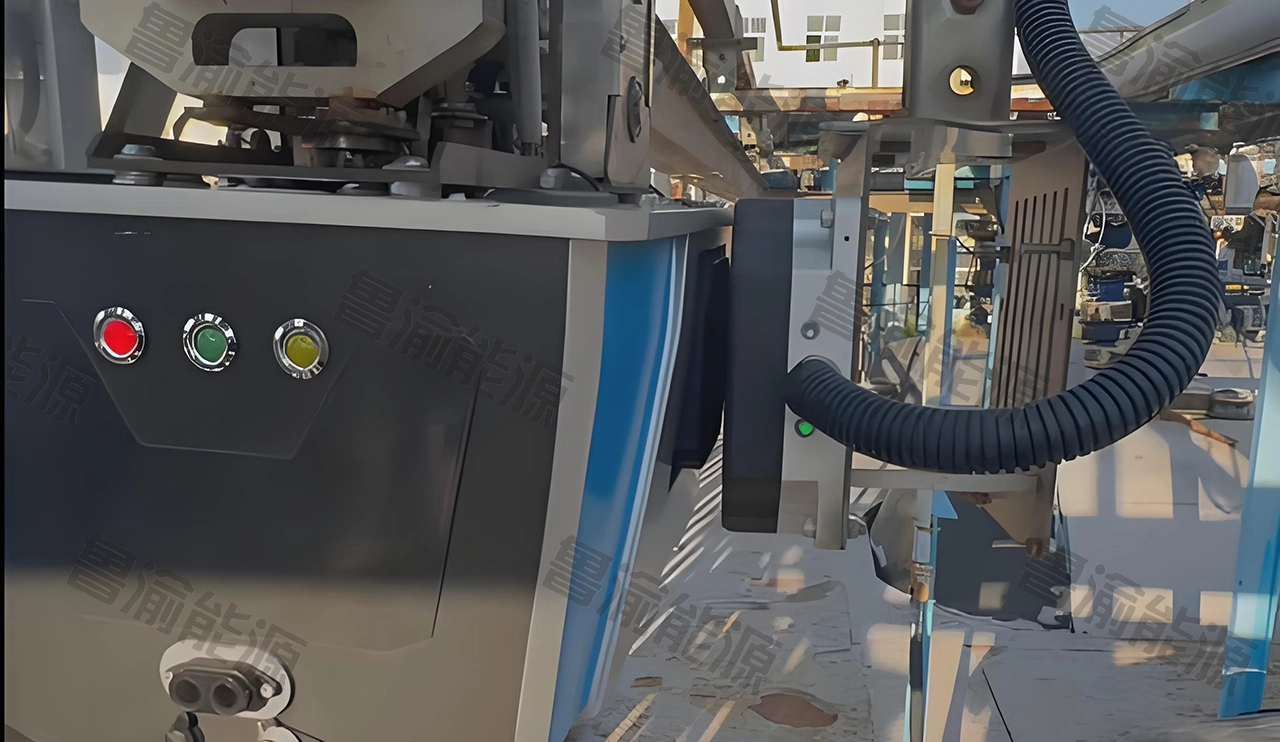
 Explosion-proof Wireless Charging