

WIRELESS CHARGING IN THE NEWS
The variety of mobile robots is expanding rapidly. AGVs and AMRs in factory workshops, four-way shuttle vehicles moving between storage shelves, inspection robots for outdoor operations, photovoltaic cleaning robots, livestock feeding robots, and service robots in hotels and hospitals - they come in various forms and have different functions, but they all share one "weak point": charging.
Unlike fixed-position industrial equipment, the entire value of mobile robots lies in "movement". However, traditional charging methods require them to frequently return to fixed charging positions, and even require manual insertion and removal. This not only disrupts the work rhythm but also leaves a gap in the "unmanned" closed loop.
Why do mobile robots need wireless charging?
The charging problem of mobile robots is more complex than that of fixed equipment because the application scenarios are more diverse.
In the industrial mobile robot (AMR, AGV) scenario, traditional contact charging faces problems such as wear of metal contacts, high requirements for alignment accuracy, and the need for manual intervention. In the inspection robot scenario, the equipment often operates in harsh environments such as dampness, dust, high and low temperatures, and exposed charging contacts are prone to oxidation and corrosion. In the service robot and special robot scenarios, the charging facilities need to be integrated into the working environment and cannot damage the aesthetics and safety of the scene.
The deeper issue is: mobile robots pursue "automation" and "continuous operation". But traditional charging methods either require manual insertion and removal or require the robot to interrupt its operation and return to the fixed charging position - both of which are contrary to the goal of "unattended continuous operation".
Market data also confirms this trend. According to QYResearch, the global sales of wireless charging for AMR (autonomous mobile robots) will reach 1.457 billion yuan in 2025, and is expected to reach 2.538 billion yuan in 2032, with a compound annual growth rate of 8.3%. The global robot charging station market is valued at approximately 1.53 billion US dollars in 2026 and is expected to grow to 5.83 billion US dollars in 2033, with a compound annual growth rate of 21.1%. Wireless charging is evolving from "optional" to the "standard" for mobile robots.
At the technical route level, the wireless charging in the industry is mainly divided into two types: electromagnetic induction and magnetic resonance. The technical route chosen by WIRELESSPT is magnetic coupling resonance, which has higher tolerance for transmission distance and offset compared to the ordinary electromagnetic induction scheme, and the transmitting end and receiving end do not need to be precisely aligned.
Recent industry trends also indicate that charging automation is accelerating. In July 2026, Zhida Technology and Ningbo High-tech Zone jointly established the world's first dedicated production base for automatic charging robots with an annual output of tens of thousands of units. In the same month, a certain technology company confirmed on the interactive platform that its wireless charging technology has been applied in industrial mobile robots, service robots, and other fields. The wireless charging track for mobile robots is heating up.
II. Comprehensive Coverage: A Complete Product Range from 180W to 6000W
To meet the differentiated needs of mobile robots in various scenarios, WIRELESSPT has launched a wireless charging product series covering power ranges from 180W to 6000W. The output voltage ranges from 24V to 96V, meeting diverse requirements from small service robots to heavy-duty unmanned forklifts.
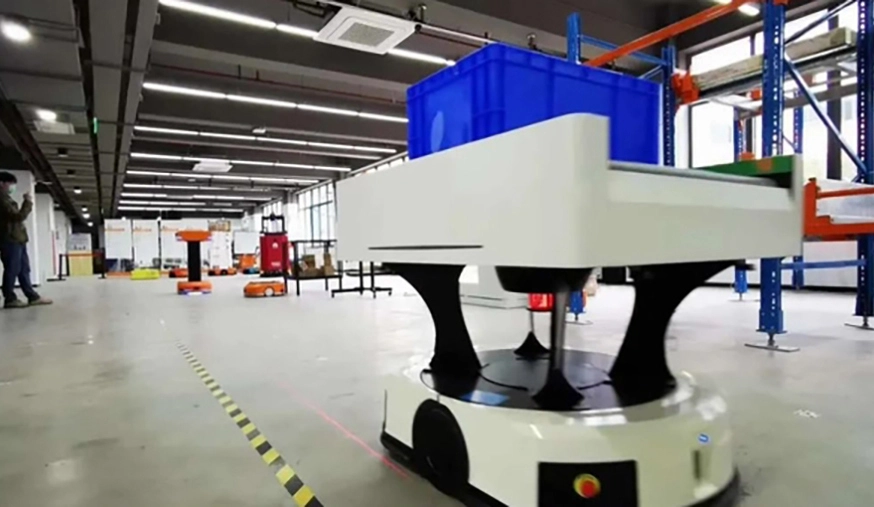
In the industrial mobile robot (AGV/AMR) scenario, WIRELESSPT's integrated high-power wireless charging system boasts core advantages such as integrated design, high offset tolerance, and fast charging with large current. When the remaining battery power of the robot drops below the warning threshold, it automatically plans a path to the nearest wireless charging station, achieving energy transmission through magnetic resonance, eliminating the need for human intervention, and enabling truly 7×24-hour automated operations. Typical products include the 3000W-48V-50A wireless charger, with a charging distance of 0-80mm and a horizontal offset of ±50mm, which has been widely applied in production line AGVs and unmanned forklift scenarios.
In the explosion-proof robot scenario, WIRELESSPT's explosion-proof series products have obtained Ex mb IIC T6 Gb and Ex mb IIIC 80°C Db gas and dust dual certifications. The zero-spark characteristic of magnetic resonance wireless charging technology fundamentally eliminates safety hazards, and is particularly suitable for hazardous environments such as oil, chemical, and mining industries. Explosion-proof models such as 500W and 1200W have been stably operating in the underground inspection robot projects of the State Energy Group's coal mines.
In the inspection robot scenario, WIRELESSPT's waterproof series products achieve IP67 protection level and can operate stably in low temperatures, humid environments, and dusty conditions. WIRELESSPT has launched a full-power wireless charging solution from 180W to 6000W, providing "instant charging upon arrival, seamless battery life" energy support for wheeled inspection robots and suspended (hanging) inspection robots. Inspection robots in coal conveyor galleries need to work in extremely low and high temperature environments, with no electrodes on the equipment, and have excellent weather resistance, capable of withstanding various climatic tests.
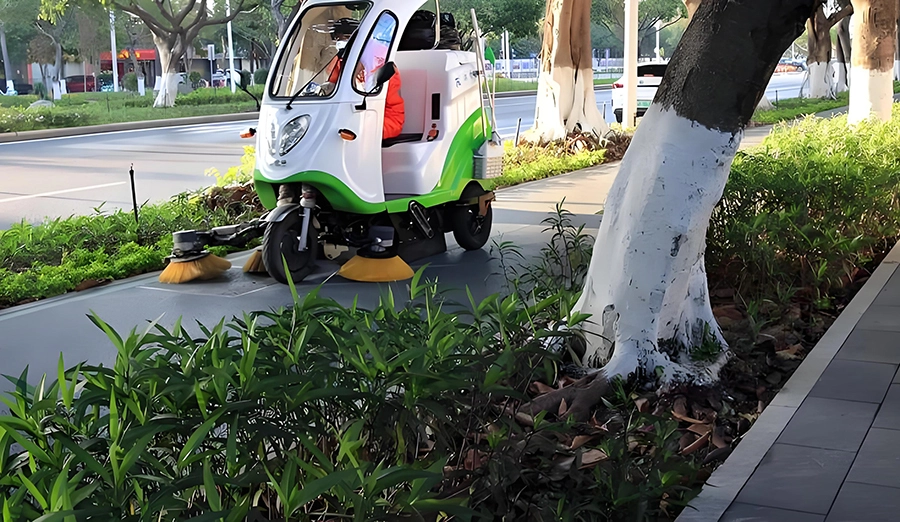
In the special robot scenario, WIRELESSPT offers customized wireless charging solutions ranging from dozens of watts to thousands of watts. The 300W waterproof wireless charger can be applied to various mobile robots with waterproof and moisture-proof requirements, such as photovoltaic cleaning robots and material pushers. The split 1200W and 3000W wireless chargers are small in size, can be easily embedded in the robot, and are combined with IP67 protection level to achieve dust-proof, moisture-proof, and interference-proof. In addition, WIRELESSPT has also launched a full-power robot dog wireless charging solution from 180W to 6000W.
III. Technical Foundation: High Degree of Freedom, High Efficiency, High Reliability
The core technology of the WIRELESSPT mobile robot wireless charging solution is the magnetic coupling resonant wireless charging method.
High degree of freedom is its most prominent advantage in the mobile robot scenario. The transmitting end and the receiving end do not need to be precisely aligned, and there is a wide transmission air gap distance. There can be a large offset in the horizontal and vertical directions. The rated output current of the WIRELESSPT 6000W wireless charger reaches 100A, and it can maintain full-load output within the standard working distance. Whether it is an inspection robot with outdoor GPS signal drift or an AMR with limited positioning accuracy between shelves, it can "charge approximately and stop".
In terms of high efficiency, the maximum transmission efficiency of the system can reach 93%. The energy loss during the charging process is extremely small. For mobile robot fleets that need frequent charging, the energy efficiency advantage directly translates into operational cost advantages.
In terms of high reliability, the product has passed IP65/IP67 protection level certification and can operate stably in low temperatures, humid environments, and dusty conditions. Without electrodes, there is no oxidation and wear; without plugging and unplugging, there are no mechanical failures. The split product supports the "near and charge" mode. When the robot enters the charging area and stops, the system automatically wakes up and starts energy transmission without sending complex instructions or requiring manual confirmation.
IV. Company Strength: Ten years of accumulation, over a hundred patents, annual production capacity of 20,000 sets
WIRELESSPT specializes in the research, development, production and sales of high-power, industrial-grade wireless charging products. The founder is a doctoral graduate from Tsinghua University, and the core R&D team comes from universities such as Tsinghua University and Harbin Institute of Technology.
In terms of technological accumulation, the company holds over 100 patents in the field of wireless charging, including 45 authorized invention patents. The products have passed ISO9001 and ISO14001 system certifications. It has a 2,000-square-meter automated assembly and testing workshop in Yantai, Shandong Province, with an annual production capacity of 20,000 sets.
In terms of product coverage, WIRELESSPT's products and technologies have been widely applied in 50 or more specialized fields such as petroleum, chemical industry, power, logistics, and warehousing, serving over 300 customers. The core concept of wireless charging is to integrate charging into the working process of robots. When mobile robots move from "proof of concept" to "large-scale deployment", charging is no longer an embellishment but an infrastructure that determines whether robots can truly "be on duty 24/7".



 AGV/AMR Manufacturing Wireless Charging Solution
Inspection Robot Wireless Charging Solution
Mining Explosion-proof Wireless Charging Solution
Service Robot Wireless Charging Solution
Photovoltaic Robot Wireless Charging Solution
Outdoor Cleaning Robot Wireless Charging Solution
 Contact: Ms. Yang
 +86 18678901310
 luyu@wireless-power.com.cn
 801, 8th Floor, Building 1, Huizhiyuan, 117 Huizhiqiao Road, High-tech Zone, Qingdao,China
 WECHAT





 EN
EN

 +86 18678901310