

WIRELESS CHARGING IN THE NEWS
In 2026, the domestic market for intelligent manufacturing, smart mines, smart agriculture, and low-altitude inspection mobile robots will witness a wave of large-scale deployment. Industry research data shows that the market size of wireless charging for domestic mobile robots has increased by 22.2%, but over 70% of the existing AGV, AMR, and inspection robots still use the plug-and-socket contact charging method. The three major pain points of manual reliance in the charging process, equipment downtime, and safety corrosion have become the core weaknesses restricting the 24-hour continuous operation of the cluster. WIRELESSPT, as a leading supplier of industrial-grade wireless charging solutions in China, relying on its self-developed PTSmart symmetry resonant core technology, covers a full power standard product matrix ranging from 180W to 6000W, and is suitable for 50+ specialized mobile robot scenarios in warehousing, manufacturing, mining, agriculture, and power. It has served over 300 industrial customers and promoted non-contact wireless charging to become a standard infrastructure for mobile robots through measured parameters and real-world cases.
Currently, all types of mobile robots generally face common industry problems of traditional contact charging. Firstly, the equipment's operational rate is severely damaged. Contact charging requires a positioning accuracy of ±3mm for docking, and ordinary navigation robots are prone to docking failure. The fleet spends 30%-35% of its time each day waiting for charging and traveling back and forth, resulting in a utilization rate of less than 65%. Secondly, the long-term maintenance costs are high. Metal plugs and plates are constantly eroded by dust, moisture, and corrosive gases. They need to be replaced in batches every 3-6 months, and the annual maintenance cost for a fleet of 100 robots exceeds 60,000 yuan. Thirdly, there are safety red lines in many harsh scenarios. Sparks generated by plugging and unplugging in lithium battery workshops, coal mines, and grain and oil factories directly violate safety compliance standards. Fourthly, the adaptability for retrofitting is poor. Traditional charging cables and connectors are bulky and difficult to adapt to retrofitting in narrow chassis, outdoor, and underground humid conditions.
To meet the differentiated power supply needs of all types of mobile devices such as hidden AGV, heavy-load AMR, underground箕斗 robots, agricultural spraying robots, and power inspection robots, WIRELESSPT relies on 240W/1200W/3000W/4500W/6000W standardized modular kits to create an integrated wireless charging solution. The core hardware performance achieves industry differentiation breakthroughs.
From the perspective of hardware core parameters, the mainstream 1200W (48V 20A) model of Lu Yu has a full-load vertical charging distance of 0-50mm, the maximum X-axis deviation is ±60mm, and the Y-axis is ±10mm. The 4500W high-power heavy-duty model supports a charging gap of 0-80mm, and the X-axis allows a 50mm docking deviation. It perfectly adapts to the navigation and positioning errors of various robots, without the need to install high-precision positioning modules. The full-load transmission efficiency of all products can reach up to 93%, with a power factor of ≥0.98. It supports intelligent charging management with constant current and constant voltage, and is equipped with multiple-level protection mechanisms for overcurrent, overvoltage, and -40℃ to +60℃ wide temperature over-temperature. The transmitter and receiver use IP67 fully sealed aluminum alloy shells, and the explosion-proof series have obtained Ex mb II C T6 gas and dust dual explosion-proof certifications. They can be used in underground and lithium battery Class A workshops.
From the communication perspective, the equipment is equipped with 485/CAN dual communication interfaces and 2.4GHz radio frequency data transmission, which can seamlessly connect with MES, WMS, mine dispatching, and smart agriculture backends. It can upload charging voltage, current, temperature, and a complete set of fault codes in real time. It supports two working modes: proximity charging and command-controlled startup. Fragmented workstations can automatically replenish energy without the need for separate charging and stopping. The hardware structure is divided into two series: integrated and split. The thickness of the split receiving coil is only 25mm, suitable for small mobile robots with narrow chassis. It supports two installation methods: surface and embedded. New and old robots can be retrofitted in 2 hours, without significant changes to the entire vehicle circuitry. In terms of technological research and development, WIRELESSPT has accumulated 45 invention patents and over 100 intellectual property rights. The core R&D team is led by a university doctoral graduate in power electronics, focusing on kilowatt-level industrial magnetic resonance wireless charging. Different from the simple amplification scheme of small-power wireless charging for the consumer market, it independently develops bilateral collaborative resonance and adaptive impedance matching algorithms to solve the industry problem of energy attenuation in large-power and long-distance charging. The company's standardized production line has an annual capacity of 20,000 sets, with power ranging from 180W micro inspection robots to 6,000W heavy-duty forklifts and underground箕斗 mobile equipment. It can customize output solutions according to different battery specifications of customers (24V/36V/48V/72V/96V), and offer multiple versions such as split, explosion-proof, and anti-corrosion options as per customer needs.
The "Robot + " Action Implementation Plan of the Ministry of Industry and Information Technology clearly states that by 2026, the coverage rate of intelligent logistics robot-related wireless charging infrastructure in key manufacturing parks needs to reach over 90%. The era of contactless automatic charging for mobile robots is entering a policy and market dual window period. Currently, there are still concerns among small and medium-sized customers regarding power, compatibility, and renovation costs. WIRELESSPT has launched a full-power product system: small and medium-sized inspection and sorting robots use 180W-1,200W economic modules, while heavy-duty, cluster storage, and underground equipment are equipped with 3,000W-6,000W high-power fast-charging solutions, taking into account the budget and working conditions of different enterprises.
For the long-term development of industrial automation, WIRELESSPT will continuously iterate higher-power, dynamic follow-up wireless charging technologies, expand new application scenarios such as underwater robots, trackable mobile equipment, and port heavy-duty AGVs. With a full series of mobile robot wireless charging solutions that are highly safe, highly fault-tolerant, and low in maintenance, it helps various industries truly achieve 7×24-hour uninterrupted autonomous operation of mobile robots and complete the last link of unmanned energy supply in intelligent manufacturing.
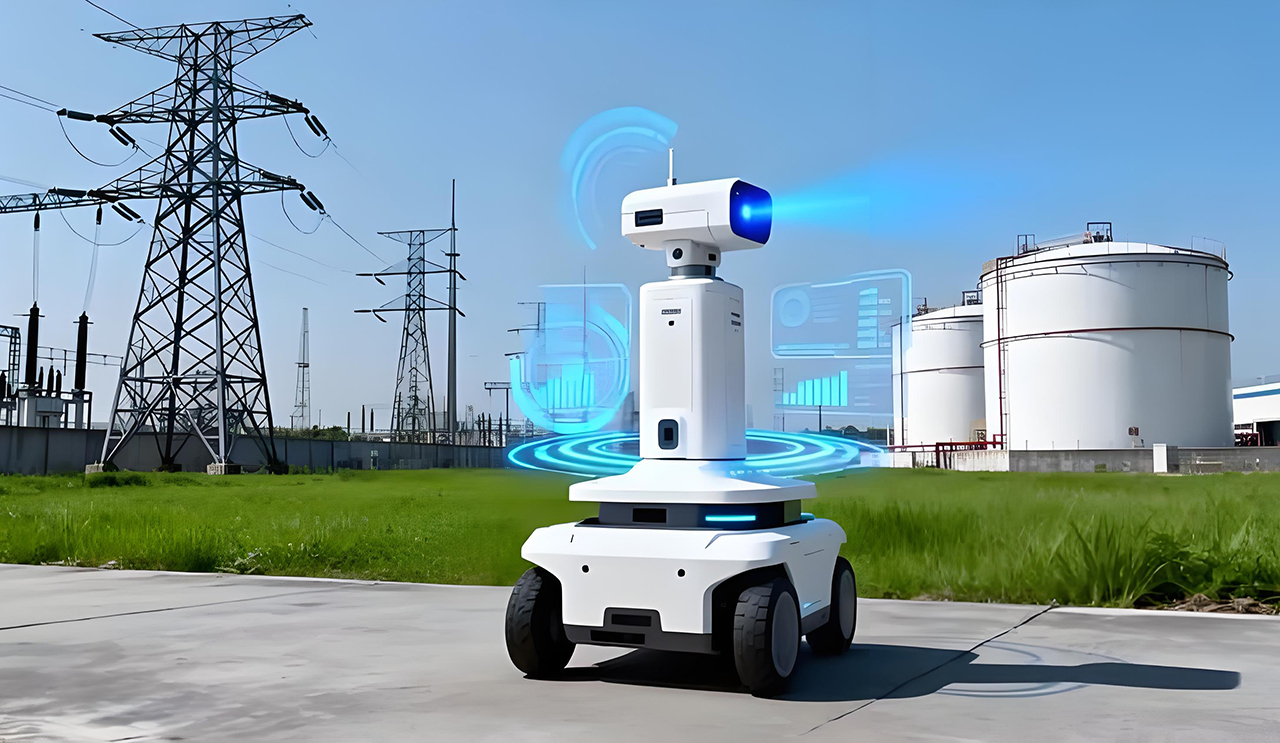

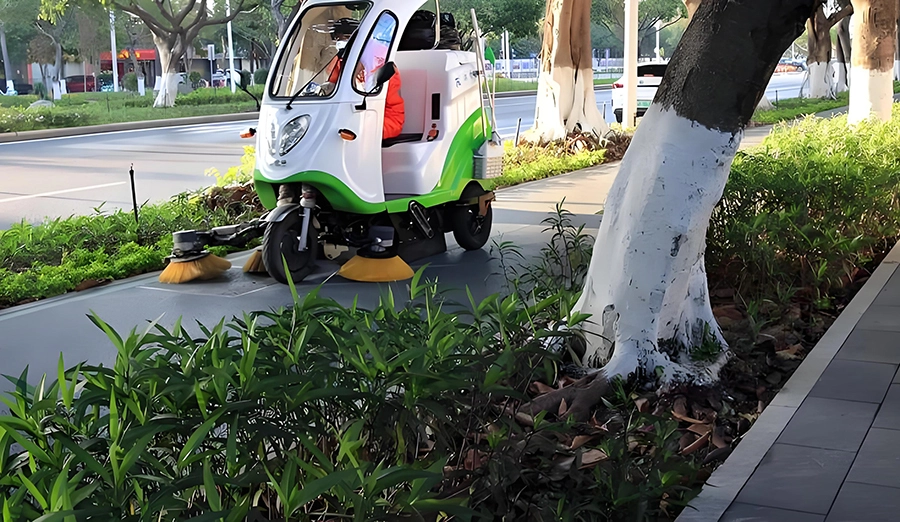

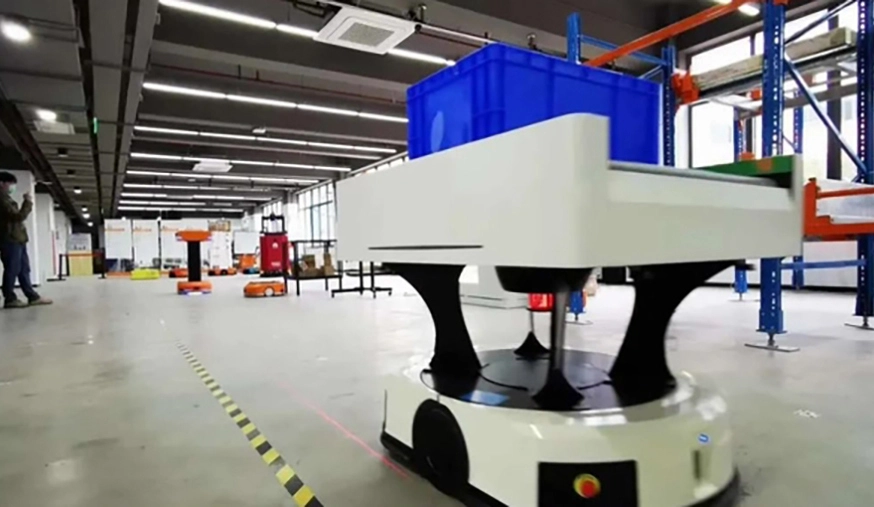
 AGV/AMR Manufacturing Wireless Charging Solution
Inspection Robot Wireless Charging Solution
Mining Explosion-proof Wireless Charging Solution
Service Robot Wireless Charging Solution
Photovoltaic Robot Wireless Charging Solution
Outdoor Cleaning Robot Wireless Charging Solution
 Contact: Ms. Yang
 +86 18678901310
 luyu@wireless-power.com.cn
 801, 8th Floor, Building 1, Huizhiyuan, 117 Huizhiqiao Road, High-tech Zone, Qingdao,China
 WECHAT





 EN
EN

 +86 18678901310