

WIRELESS CHARGING IN THE NEWS
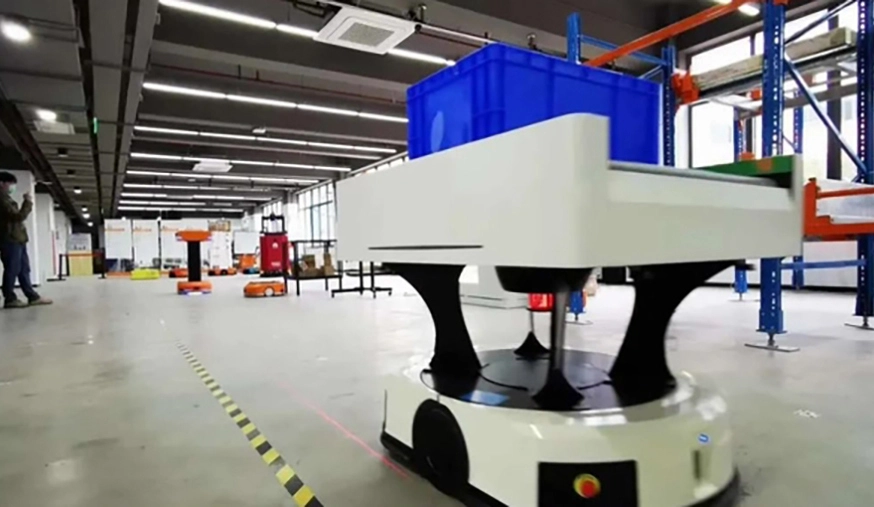
In the precise rhythm of intelligent manufacturing, AGVs and RGVs serve as the "invisible veins" that connect the warehouse and the production line. They tirelessly transport raw materials, deliver semi-finished products, and transfer finished goods. Any unexpected shutdown could cause the entire production line to slow down or even stop. However, the traditional charging methods - manual insertion and removal, electrode connection, and regular battery replacement - are becoming the bottleneck that restricts the all-day efficient operation of AGV fleets.
I. The Pain of Charging: The "Hidden Bottleneck" for the Efficient Operation of AGVs
In logistics centers or automotive welding workshops, dozens of AGVs move around in a continuous stream. However, behind the glamorous automation, the charging process often encounters the following problems:
- Contact-based charging: Wear and safety risks coexist. Traditional brush plate or pin-type charging relies on exposed electrodes for physical contact. In dusty, oily, or humid environments, the contacts are prone to oxidation and accumulation of dust, resulting in poor contact or even sparking. This not only reduces the charging success rate but also poses safety risks in storage environments with flammable materials.
- Manual battery replacement: Efficiency loss and reliance on manpower. Many enterprises still adopt the "low battery - return to station - manual removal/ replacement of batteries" model. Each AGV needs to stop for charging 1-2 times per day, each lasting more than 30 minutes. For fleets with hundreds of AGVs, this means dozens of hours of ineffective downtime and a large amount of manual intervention, weakening the return on investment in automation.
- Charging capacity shortage: Queuing reduces equipment utilization. The number of fixed charging points is limited. When multiple AGVs have low batteries at the same time, they are forced to queue up. During peak hours, the "vehicles waiting for chargers" phenomenon occurs frequently, and some AGVs get stuck due to being unable to timely replenish power, disrupting the scheduling plan.
- High maintenance costs: Frequent contact wear and replacement of connectors. The lifespan of mechanical contacts is usually only tens of thousands of plug-ins and unplugs. On 24-hour production lines, contact components need to be replaced every 3-6 months, resulting in considerable spare parts and labor costs.
II. Solution: WIRELESSPT High-power Wireless Charging, Making AGVs "Ready for Charging at Any Time"
WIRELESSPT has developed 1500W and 3000W high-power wireless charging systems specifically for AGV/RGV applications. Using non-contact and highly flexible magnetic resonance technology, it reconfigures the energy replenishment method for mobile robots.
Core Differentiating Features:
1. Truly "invisible" charging, no need for precise alignment.
Traditional wireless charging has strict requirements for docking accuracy. Even a slight deviation can lead to a significant drop in efficiency or even failure to charge. WIRELESSPT products have a horizontal offset tolerance of ±50mm in the X-axis and ±10mm in the Y-axis (1500W/3000W are the same), and a vertical working distance of 20-100mm (1500W) or 0-80mm (3000W). AGVs only need to roughly stop to enter the efficient charging state, significantly reducing the alignment pressure on the navigation and scheduling systems.
2. High-current fast charging, using fragmented time for energy replenishment.
Both products support a rated output current of 50A (1500W is 24V/50A, 3000W is 48V/50A). The charging speed is significantly higher than that of ordinary contact charging. By taking advantage of the short stopovers during AGV operations (such as loading and unloading, waiting for signals), energy can be quickly replenished, achieving "charging while working".
3. High efficiency and intelligent thermal management, stable and reliable.
The full-load transmission efficiency is ≥87%, approaching the level of wired charging. It has multiple safety mechanisms such as over-temperature protection (automatically reducing load or shutting down at 75℃ ± 2℃), overcurrent and overvoltage protection, ensuring stable operation in a wide temperature range of -20℃ to 50℃ (3000W) or -40℃ to 60℃ (1500W). The transmitter and receiver both reach IP65 protection level, effectively resisting dust and water splashes, and adapting to the harsh conditions of industrial sites.
4. Flexible startup, seamless integration with the scheduling system.
Supports BMS mode (near charging) and command mode (CAN/485 wake-up). In the near charging mode, AGVs enter the charging area and remain stationary for 12 seconds before automatically starting charging, stopping automatically once the start is completed, without the need for additional communication handshake. In the command mode, the charging start and stop can be precisely controlled by the fleet scheduling system, achieving the optimal synergy of energy and tasks.
III. Typical Application Scenarios: How Wireless Charging Solves Practical Pain Points
Scenario One: Automotive and Component Production Lines - High-speed Continuous Operation
In automotive assembly or component processing workshops, AGVs move along fixed routes and will stop at multiple workstations for brief stays. The traditional sliding contact lines or contact-based charging methods are prone to frequent failures due to wear and tear, and the cost of line shutdown maintenance is high. By using a wireless charging system, a transmitting end can be embedded under each stopover workstation. The AGV will automatically recharge each time it stops. The problem of sliding contact line wear is significantly alleviated, and the production line's operation rate is significantly improved, while the maintenance time is noticeably reduced.
Scenario Two: E-commerce and Manufacturing Warehouses - Multiple Vehicles Collaborating without Queuing
In large warehouses or distribution centers, dozens of concealed AGVs operate simultaneously. If relying on fixed charging points, there is a severe shortage of charging positions during peak hours, and vehicles queue up, resulting in a decrease in picking efficiency. By distributing wireless charging transmitting ends at natural stopover points such as shelf areas and sorting platforms, the AGV uses the short intervals of each stopover for fragmented fast charging. The daily charging frequency of each vehicle increases from 1-2 times with dedicated charging piles to dozens of times without feeling the need for charging, eliminating the queueing phenomenon at charging points, and effectively improving the overall throughput of the fleet.
Scenario Three: Heavy-duty RGV Circular Lines - High-Power Continuous Transportation
In raw material warehouses of heavy industries such as steel and building materials, heavy-duty RGVs transport bulk materials along tracks. The traditional power cables are prone to being crushed and broken, and each failure requires a long repair time, seriously affecting production and material supply. By using a wireless charging system, it is installed at the parking and loading/unloading positions of the RGVs, and it uses the several minutes of each loading and unloading of materials for automatic charging. The risk of cable failure is significantly reduced, the availability of RGVs is significantly improved, and the production loss caused by power supply issues is significantly reduced.
IV. Strength Assurance: WIRELESSPT - The Pioneering Player in Industrial Wireless Charging
Dr. Li Dan from WIRELESSPT is a pioneer in the industrialization of radio frequency energy transmission technology in China, with over a decade of experience in power electronics and magnetic coupling technology. The company focuses on industrial-grade wireless charging and has obtained more than 100 patents. Its products cover the full power range from 10W to 30kW, with a system efficiency of 90% - 95%, ranking at the forefront of the industry.
"Industrial scenarios cannot afford 'frills'," Li Dan said. "Our wireless charging equipment needs to work stably in dusty, vibrating, and temperature-changing environments, reducing malfunctions and lowering maintenance requirements. The core of AGV wireless charging is not 'wireless', but 'unobtrusive' - making the charging process fade out from the to-do list of operators."
Currently, WIRELESSPT has served over 100 well-known enterprises such as China Shipbuilding, Weichai, and Southern Power Grid, and its products are widely used in AGV/AMR/RGV in fields such as automotive manufacturing, 3C electronics, pharmaceutical cold chain, and e-commerce warehousing.
V. Say Goodbye to "Charging Anxiety" for AGV Fleets
In an intelligent factory where efficiency is paramount, every minute of downtime affects output. The WIRELESSPT1500W/3000W high-power wireless charging system, with its high offset tolerance, large current fast charging, IP65 protection, and intelligent maintenance-free features, empowers AGV fleets with the ability to "charge while parked and continue operation".
If you are queuing for AGV charging, experiencing contact failures, or having to manually replace batteries, please contact us to obtain a wireless charging renovation plan. WIRELESSPT makes the energy replenishment of industrial mobile robots more natural.



 AGV/AMR Manufacturing Wireless Charging Solution
Inspection Robot Wireless Charging Solution
Mining Explosion-proof Wireless Charging Solution
Service Robot Wireless Charging Solution
Photovoltaic Robot Wireless Charging Solution
Outdoor Cleaning Robot Wireless Charging Solution
 Contact: Ms. Yang
 +86 18678901310
 luyu@wireless-power.com.cn
 801, 8th Floor, Building 1, Huizhiyuan, 117 Huizhiqiao Road, High-tech Zone, Qingdao,China
 WECHAT





 EN
EN

 +86 18678901310