In today's era of rapid technological development, smart agriculture is gradually becoming the mainstream trend in the agricultural sector. Livestock farming, as an important part of agriculture, has also undergone an intelligent transformation. The wide application of intelligent feeding robots, pig inspection robots, and cowshed feeding robot systems is greatly changing the appearance of traditional livestock farming.
However, these robots have a common "weakness" - charging. In humid, dusty, and environments with large day-night temperature differences for livestock farming, the problems exposed by traditional charging methods are particularly prominent.
The charging dilemma in the breeding environment: More complex than imagined
The environment of a breeding farm is far more complex than that of a factory workshop. High humidity, abundant dust, and high concentrations of corrosive gases such as ammonia pose extremely harsh challenges to electronic equipment.
Traditional breeding robots mostly adopt plug-and-socket charging interfaces. The drawbacks of this method are magnified infinitely in the breeding environment.
Interface wear and poor contact. Frequent plugging and unplugging can easily cause interface wear, reducing charging efficiency and even triggering contact failures. In scenarios where these devices need to operate frequently and for long periods in breeding farms, interface failures mean that the robots "break down", directly affecting the execution of feeding or inspection tasks.
Pollution and corrosion. In a damp and dusty breeding environment, plug-and-socket interfaces are prone to contamination and corrosion. Studies have shown that corrosive gases such as ammonia in the breeding environment cause particularly severe erosion of metal contacts, significantly shortening the service life of charging equipment.
High cost of manual intervention. The traditional charging method requires manual plugging and unplugging, which not only increases labor costs but also makes it difficult to achieve automation and intelligence of charging. For large-scale breeding farms, the manual charging management of dozens of robots is itself a heavy task.
Safety hazards. Sparks generated during the charging process may pose potential risks in the breeding environment, which is dusty and contains ammonia gas.
These problems have greatly reduced the "unmanned" advantage of breeding robots - although the equipment can operate autonomously, it still requires manual intervention in the charging process.
2. WIRELESSPT Livestock Farming Robot Wireless Charging Solution: Designed for "Dirty, Messy, and Unsanitary" Environments
In response to the aforementioned pain points, WIRELESSPT has launched a wireless charging solution for livestock farming robots. This solution employs magnetic coupling resonant technology to achieve wireless power transmission.
In the farming scenario, the core advantages of this solution are as follows:
Convenient and efficient, without the need for manual intervention. The livestock farming robot only needs to park near the charging base to start charging automatically, without the need for manual insertion or removal. The system integrates with the robot's control system to monitor the robot's power status in real time and automatically plan charging time and path. When the robot's power drops below the set value, it will automatically return to the charging area for charging.
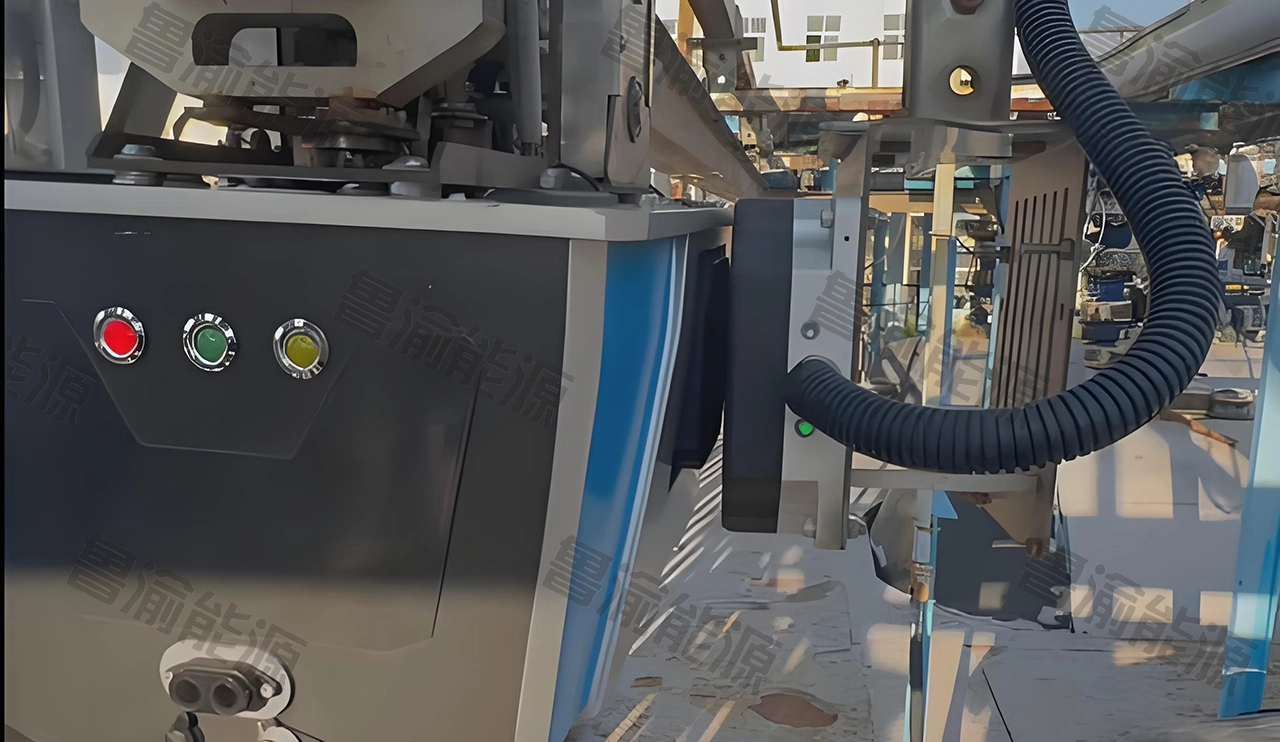
Waterproof, dustproof, and corrosion-resistant, suitable for harsh environments. The wireless charging module adopts waterproof, dustproof, and corrosion-resistant design. In the high humidity, dust-filled, and corrosive gas-filled environment of the livestock farm, this design significantly improves the stability and reliability of the equipment. Unlike traditional exposed metal contacts, the fully sealed structure of the wireless charging module fundamentally eliminates the problems of pollution and corrosion.
Avoiding electric sparks, enhancing safety. Wireless charging technology avoids the sparks and heat generated during the insertion and removal process in traditional charging methods, reducing safety risks. For livestock farms that may have dust and flammable gases, zero-spark charging is an important safety guarantee.
Extending equipment lifespan and reducing maintenance costs. Wireless charging technology reduces the wear on charging interfaces, lowers the occurrence rate of equipment failures, and thus extends the lifespan of the livestock farming robot. For large-scale livestock farming enterprises, this means lower equipment replacement frequencies and fewer maintenance expenditures.
In addition, this solution also supports simultaneous charging of multiple robots, meeting the needs of large-scale farming.
3. Covering various types of farming robots
The wireless charging solution for farming robots offered by WIRELESSPT is not specific to a single model, but covers a wide range of common robot types used in the livestock industry.
Intelligent feeding robots. These robots can precisely dispense feed based on the growth stage and requirements of the livestock. The wireless charging technology enables them to automatically return to the charging base after completing the feeding task, ensuring uninterrupted operation for 24 hours.
Pig inspection robots for breeding. They can monitor the environmental parameters and health conditions of the pigs in the pigsty in real time. Through wireless charging, the inspection robots can replenish their power at any time during the inspection process, ensuring continuous and stable operation.
Slaughterhouse feed-dispensing robots. They can evenly distribute feed to all corners of the slaughterhouse. The wireless charging enables them to charge automatically during the feed-dispensing process, ensuring continuous operation.
In addition, WIRELESSPT's wireless charging platform has extremely strong adaptability. Through modular design, it can provide customized solutions for robots ranging from four-legged robots and livestock robots with power of several hundred watts to AGVs with power of several thousand watts.
4. Industry Trend: From "Optional" to "Standard"
As the scale and intensity of the livestock farming industry continue to increase, livestock farming robots are moving from "concept" to "standard". And wireless charging, as a key technology to ensure continuous operation of the robots, is also moving from "optional" to "standard".
Some industry observations indicate that wireless charging technology will be deeply integrated with technologies such as the Internet of Things and big data to achieve comprehensive intelligent management of livestock farming. The wireless charging solution for livestock farming robots by WIRELESSPT provides strong technical support for smart farming and will drive the livestock farming industry towards intelligence and modernization.
WIRELESSPT holds over 100 patents in the field of wireless charging, including 45 authorized invention patents. The company has a 2,000-square-meter automated factory in Yantai, Shandong Province, with an annual production capacity of 20,000 sets. It has passed ISO9001 and ISO14001 system certifications. In the application scenario of wireless charging for livestock farming robots, WIRELESSPT has formed a complete capability from scheme design to batch delivery, with products covering a wide power range from a few watts to several thousand watts.


 EN
EN


 +86 18678901310








 Explosion-proof Wireless Charging