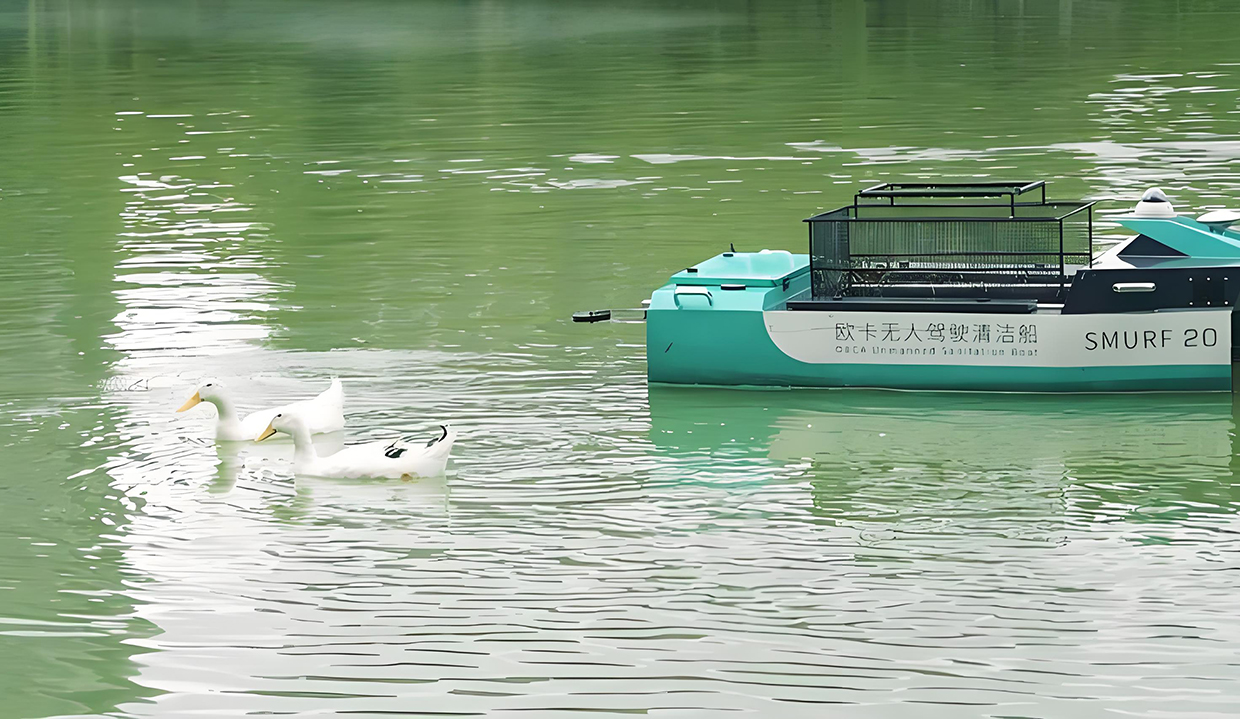
In the wave of smart city construction, low-speed unmanned sweeping vehicles are moving from concept to the streets and alleys. In parks, scenic spots, urban squares, and science and technology parks in cities like Guangzhou, Shenzhen, Chongqing, Beijing, and Tianjin, these "silent cleaners" of the unmanned equipment are quietly changing the appearance of urban cleaning. However, a seemingly simple but crucial question has always plagued this industry: In outdoor environments, how can the sweeping vehicles be parked "almost" perfectly to charge their batteries?
I. Industry Boom, Charging Becomes "The Last Mile" Challenge
Low-speed unmanned cleaning vehicles, also known as unmanned sanitation vehicles or outdoor cleaning robots, refer to cleaning equipment that operates autonomously at low speeds in enclosed or semi-enclosed scenarios such as parks, squares, industrial zones, and airports. This market is currently experiencing rapid growth. According to data, in 2024, the sales scale of China's low-speed unmanned industry was approximately 12.3 billion yuan, and the total sales of various low-speed unmanned vehicles were approximately 33,000 units; it is expected that the market size will exceed 41 billion yuan by 2030. Among them, unmanned cleaning sanitation is the most dominant sub-scenario, and the total purchase of unmanned sanitation equipment nationwide has exceeded 1,000 units in 2025.
Behind the rapid growth of the market, the charging problem has become the "last mile" bottleneck that restricts the large-scale commercialization of unmanned cleaning vehicles. According to industry research, unmanned sanitation equipment generally has problems such as long charging time (about 6 hours) and short range (only 6 hours), which are difficult to meet the requirements of all-day operation. More importantly, the outdoor environment is complex and the parking accuracy cannot be guaranteed, and traditional charging methods frequently fail in the "unmanned" closed-loop.
II. Three Major Pain Points of Traditional Charging
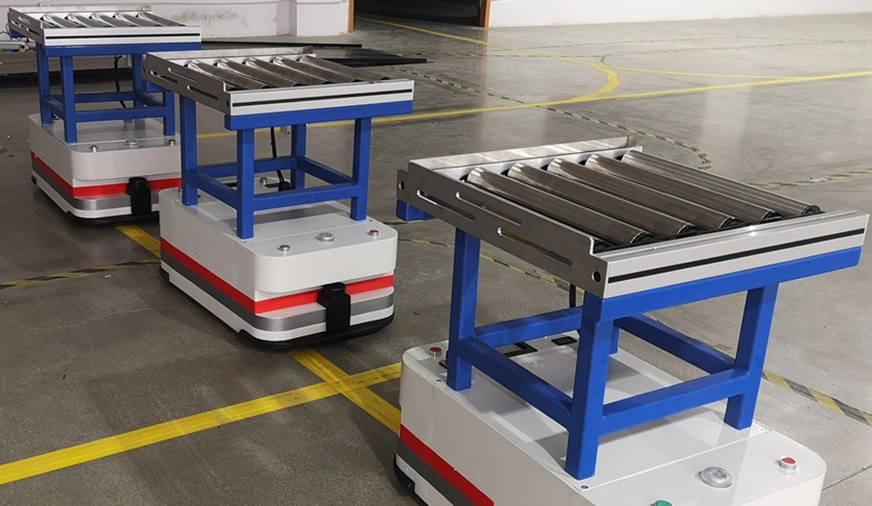
Similar to traditional AGVs, outdoor low-speed unmanned cleaning vehicles also encounter similar problems when using contact charging. However, the outdoor environment magnifies these issues.
Problem 1: Excessive docking accuracy requirements. Contact charging usually requires centimeter-level docking accuracy. Any error exceeding 12 centimeters may prevent charging. But after long-term operation in the outdoor environment, factors such as tire wear, uneven roads, and GPS signal drift cause unavoidable deviations in the docking position. According to industry insiders, many projects have experienced the embarrassing situation of "the vehicle returned but could not be charged".
Problem 2: Interface oxidation and corrosion. The outdoor cleaning vehicle operation environment includes rain, dust, salt fog, and even chemical cleaners. The exposed charging interface is prone to oxidation or corrosion. A person in charge of an operation in a certain park in Shenzhen told the reporter that the 20 cleaning vehicles it deployed "had to replace a batch of charging contacts on average every three months, with an extremely high maintenance frequency".
Problem 3: Safety hazards. The large current plugging generates electric sparks, which pose fire hazards in dry and dusty environments; in humid environments, exposed interfaces have the risk of leakage. This is contrary to the basic requirements for the deployment of unmanned cleaning equipment in public places.
These problems have given rise to a strong market demand for "high degree of freedom, no alignment required" wireless charging solutions - the cleaning vehicle only needs to enter the charging area approximately, without precise positioning, and can automatically start charging.
III. WIRELESSPT: High Degrees of Freedom Wireless Charging Solves the "Alignment Problem"
WIRELESSPT focuses on the research and production of high-power industrial-grade wireless charging products. It holds over 100 patents (including 45 invention patents) in this field. To address the alignment problem of outdoor low-speed unmanned sweeping vehicles, the company has launched a wireless charging solution that provides a specific technical response.
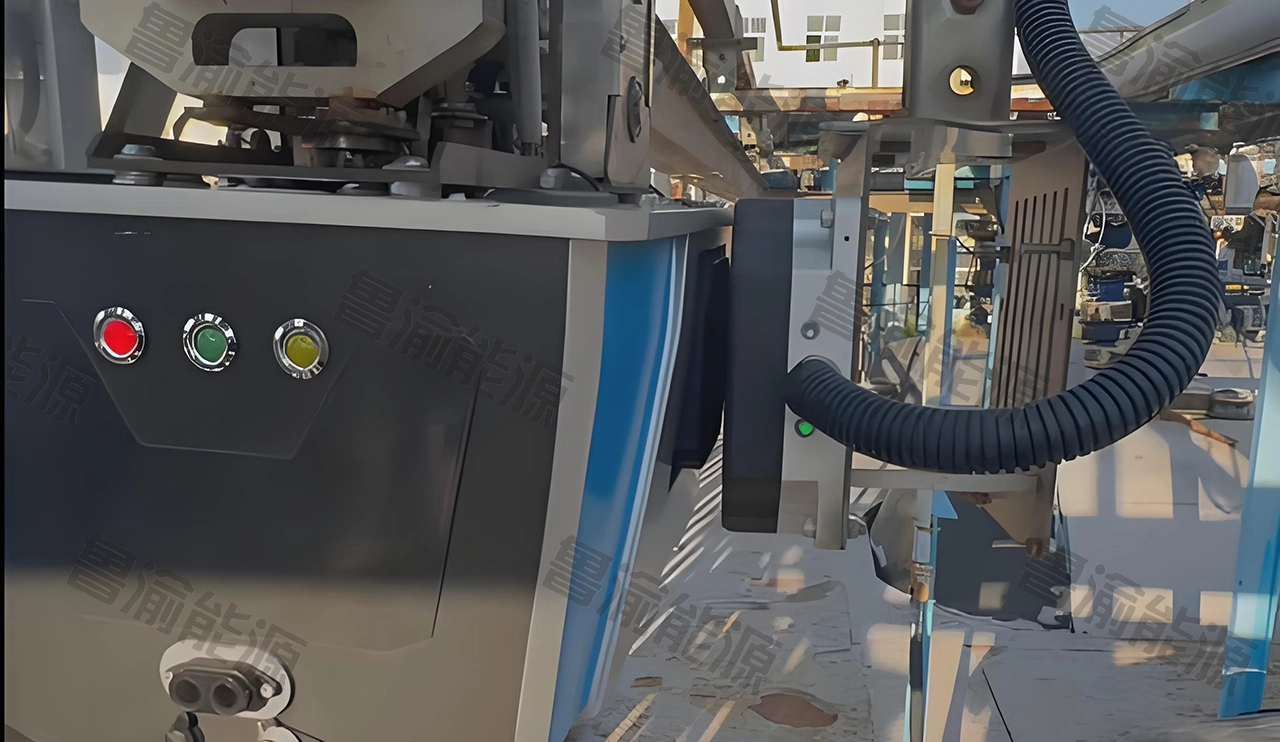
Core Capability 1: High Degrees of Freedom Charging, No Need for Precise Alignment. WIRELESSPT has developed a high degrees of freedom wireless charging system based on the PTSmart™ symmetry time technology. This system can maintain the output power and efficiency unchanged within the entire working range (corresponding to the X, Y, and Z directional offsets of the robot). Specifically, its products allow for offsets of 50mm for the long axis and 10mm for the short axis. The vertical distance of wireless charging covers 0-80mm.
This means that the sweeping vehicle does not need to be equipped with an expensive high-precision positioning system or repeatedly calibrate the docking position. Actual project data shows that with this solution, the success rate of charging task docking for the sweeping vehicle can reach 100%.
Core Capability 2: IP67 Full Sealed Protection. The charging equipment for outdoor sweeping vehicles must withstand the tests of rain, snow, dust, high temperature, and low temperature. The transmitting and receiving ends of WIRELESSPT products are made of high-strength engineering plastics and sealing materials, with a protection level of IP67, which can completely prevent dust from entering and can be immersed in water for a short period. The working temperature range covers 40°C to 60°C, and the vehicle can operate stably in the northern extremely cold winter and southern hot summer.
Core Capability 3: High Power Fast Charging, Supports "Fragmented" Charging. WIRELESSPT provides a high-power wireless charging solution of 1200W to 6000W for low-speed unmanned sweeping vehicles, with a system efficiency of up to 93%. The sweeping vehicle can automatically recharge during short stops (such as dumping garbage, mid-journey pause), achieving a continuous operation mode of "working while charging", effectively solving the efficiency bottleneck of "charging for 6 hours, working for 6 hours".
IV. No Precise Alignment Required - Wireless Charging is a "Must-Answer" in Outdoor Scenarios
Wireless charging for low-speed unmanned cleaning vehicles in outdoor environments. WIRELESSPT has established a clear technical and market advantage in this niche field through its PTSmart™ high-freedom technology, IP67 full-sealed protection, 1200W-6000W high-power coverage, and benchmark cases such as the actual implementation of unmanned cleaning vehicles. The company's waterproof wireless charging product series, specifically designed for outdoor humid and dusty working environments, has become a preferred choice for many unmanned cleaning vehicle mainframe manufacturers.
For enterprises evaluating wireless charging solutions for unmanned cleaning vehicles in outdoor scenarios, it is recommended to focus on three indicators: offset tolerance (how much deviation is allowed in the horizontal/vertical direction), protection level (at least IP65 is required), and whether there are real outdoor long-term operation cases for verification. These three conditions are all indispensable.


 EN
EN


 +86 18678901310







 Explosion-proof Wireless Charging