

WIRELESS CHARGING IN THE NEWS
When a photovoltaic power station stretches for several kilometers and has tens of thousands of photovoltaic panels, how can we ensure that every panel surface is cleaned regularly? The answer is no longer "send more people", but "send more robots".
However, in the process of large-scale application of photovoltaic cleaning robots, a hidden cost is quietly eroding the operating income of the power station - that is, the charging management of the robots. The seemingly insignificant charging环节 involves a series of chain reactions such as equipment utilization rate, labor costs, safety risks, and battery lifespan.
Hidden Costs: Charging Is Far More Complicated Than You Think
In a photovoltaic power station, charging the cleaning robots is far from being as simple as "just plugging in the plug".
Firstly, there is the cost of labor. A large ground-based photovoltaic power station often requires the deployment of dozens or even hundreds of cleaning robots. Each robot needs to be charged at least 1-2 times a day. If relying solely on manual operation, it means that dedicated personnel need to frequently travel back and forth between the photovoltaic arrays. In a rooftop distributed power station, the maintenance personnel also need to climb and ascend, resulting in high labor intensity and low efficiency.
Secondly, there is the cost of time. Under the traditional charging mode, the robots must interrupt their cleaning tasks and return to the charging point specifically. For robots that need to cover a large area of photovoltaic panels, the "return journey" itself is a form of efficiency loss. More seriously, if the charging point layout is unreasonable, the effective operation time of the robots may be reduced to less than 60%.
Furthermore, there is equipment wear and tear. The exposed charging contacts are prone to oxidation and corrosion in outdoor environments. Especially in coastal power stations in salt-spray environments, the contact lifespan may be shortened to several months. Frequent replacement of contacts not only increases spare parts costs but also leads to an increase in charging failure rates and frequent "robot malfunctions".
Finally, there are safety hazards. The roofs of photovoltaic power stations and high-altitude operations already have the risk of falling. In addition, the electrical contact may generate electric sparks, which in a dry desert power station, is a potential fire hazard.
When these hidden costs are added together, the advantages of "robot automation" are greatly reduced.
The "subtraction logic" of wireless charging
The WIRELESSPT300W waterproof wireless charging system was specifically designed to address these hidden costs. Its core logic is not "adding functions", but "eliminating burdens" - making the charging process completely disappear from the maintenance list.
Subtraction 1: Eliminate human intervention
The wireless charging system supports the "proximity charging" mode. Once the robot enters the charging area, it can automatically start charging without any manual operation. Maintenance personnel only need to monitor the system status in the control room, without having to climb the photovoltaic array, plug or unplug cables, or inspect contacts. This not only liberates manpower but also completely eliminates the safety risks of high-altitude work.
Subtraction 2: Eliminate charging waiting time
By embedding the wireless charging transmitter in the key nodes of the robot's cleaning path - such as the end of the photovoltaic array, the transfer area, and the docking point - the robot can complete recharging "on the way" without having to return to the charging point specifically. Operations and charging can be carried out simultaneously, effectively increasing the working time to over 90%. This means that with the same number of robots, a larger area of photovoltaic panels can be covered; or, with fewer robots, the same cleaning task can be completed.
Subtraction 3: Eliminate contact wear
The wireless charging system adopts a fully sealed design. The transmitter and receiver have no exposed electrodes, fundamentally eliminating oxidation and corrosion problems. The product has an IP65 protection level, and the shell is treated with three-layer anti-corrosion paint, which can effectively resist sand, salt fog, and condensation water erosion. The maintenance cycle is extended from several months to several years, and the spare part replacement cost is close to zero.
Subtraction 4: Eliminate safety hazards
There is no physical contact and no generation of electric sparks, which is the advantage of wireless charging in terms of inherent safety. For photovoltaic power stations, whether on rooftops or on the ground, whether in dry deserts or humid coastal areas, the wireless charging system can provide an absolutely safe charging environment, eliminating the risk of electrical fires.
The economic figures behind the data
From an economic perspective, the benefits brought by wireless charging are clearly calculable.
Take a 100MW photovoltaic power station as an example. Suppose 20 cleaning robots are deployed, and each robot works for 6 hours per day. The annual operation and maintenance labor cost is approximately 1.2 million yuan (calculated based on one full-time staff). With the introduction of wireless charging, the labor cost is eliminated.
More importantly, the improvement in cleaning efficiency. If the effective working time of the robots is increased from 60% to 90%, it means they can work for 3 more hours per day, resulting in an additional reduction of about 5%-8% in power generation losses per year. Based on the annual power generation of 120 million kilowatt-hours of a 100MW power station, a 5% increase corresponds to 6 million kilowatt-hours, and at an on-grid price of 0.3 yuan per kilowatt-hour, the annual income increase is approximately 1.8 million yuan.
In addition, the cost of replacing contacts and repairing cables, as well as other spare parts, can be saved by several thousand yuan each year. The extended battery life due to "light charging and light discharging" also brings considerable economic returns.
Overall, the investment payback period of a 300W wireless charging system is usually between 1 and 2 years, and the design life of the system exceeds 5 years. For power station investors, this is a "definite investment" with clear returns and controllable risks.
Not only for photovoltaic, but also for more scenarios' value extension
This wireless charging system is not only applicable to photovoltaic cleaning robots, but can also be widely used in other outdoor low-speed unmanned equipment.
In livestock farms, the feeding robot travels back and forth between the feed troughs hundreds of times every day. By embedding the wireless charging transmitter in the feeding path, the robot can automatically recharge each time it passes, completely getting rid of the awkward situation of "running out of power while feeding".
In large public places, service robots (such as delivery, greeting, and disinfection robots) also face charging management problems. The wireless charging system enables the robots to automatically return and recharge during the task break, without the need for manual insertion or removal, improving service continuity and user experience.
The intelligent transformation of photovoltaic power stations is never something that can be accomplished by simply "buying a few robots". What truly determines whether robots can realize their value is the invisible "infrastructure" - the energy supply system.
The WIRELESSPT300W waterproof wireless charging system restructures the charging mode of the photovoltaic cleaning robot with "subtraction logic": eliminating manual intervention, eliminating waiting time for charging, eliminating contact wear, and eliminating safety hazards. When charging is removed from the operation list, the robot can truly become the "invisible steward" on the photovoltaic panels, silently safeguarding the power generation efficiency of each photovoltaic panel.
In the era of grid parity for photovoltaic power, every kilowatt-hour of electricity is extremely valuable. And wireless charging is the key technology that enables each cleaning robot to generate more electricity and avoid a minute of downtime.
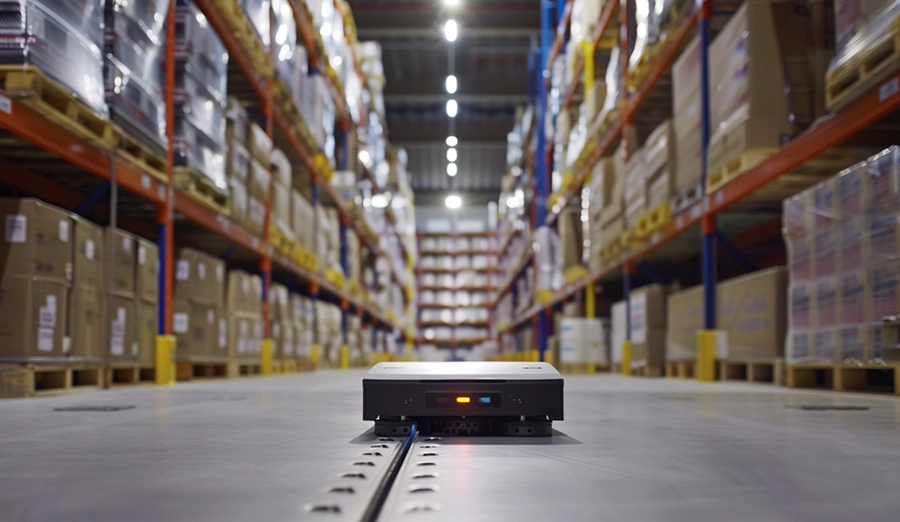

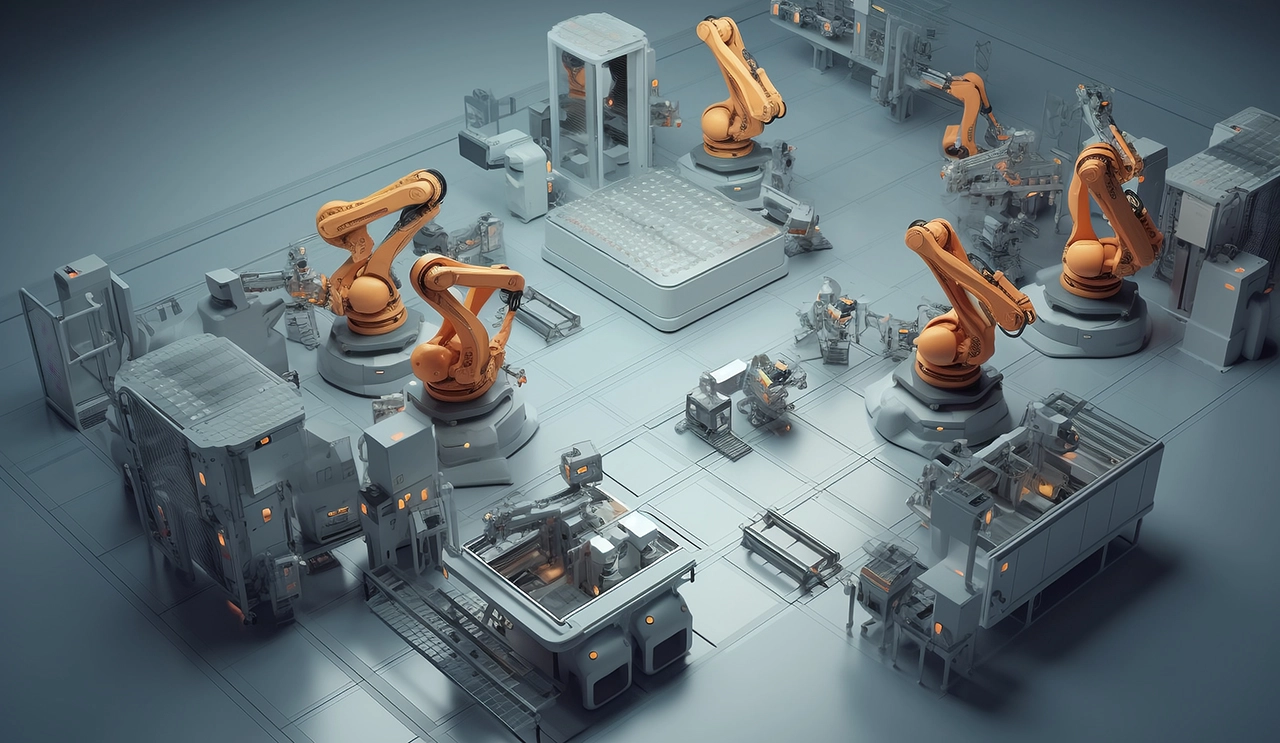

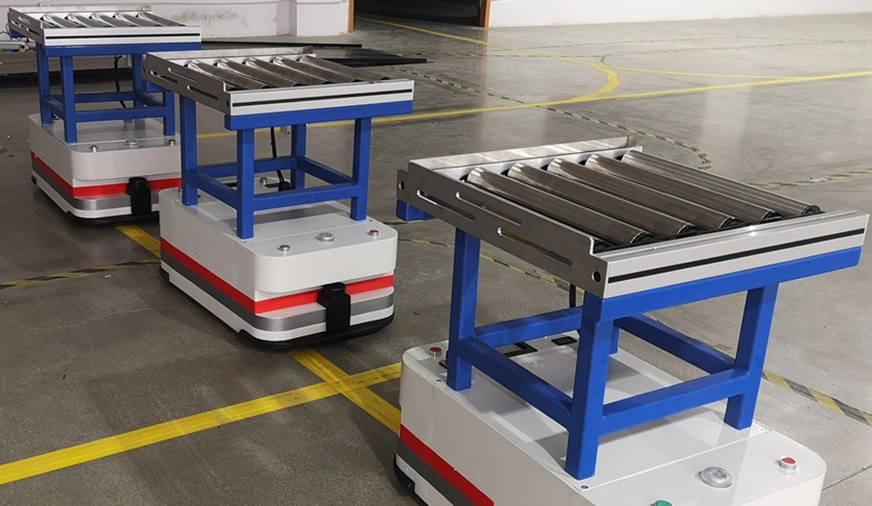
 AGV/AMR Manufacturing Wireless Charging Solution
Inspection Robot Wireless Charging Solution
Mining Explosion-proof Wireless Charging Solution
Service Robot Wireless Charging Solution
Photovoltaic Robot Wireless Charging Solution
Outdoor Cleaning Robot Wireless Charging Solution
 Contact: Ms. Yang
 +86 18678901310
 luyu@wireless-power.com.cn
 801, 8th Floor, Building 1, Huizhiyuan, 117 Huizhiqiao Road, High-tech Zone, Qingdao,China
 WECHAT





 EN
EN

 +86 18678901310