

WIRELESS CHARGING IN THE NEWS
Underwater vehicles (ROVs/AUVs), as core tools for Marine exploration, seabed engineering and underwater rescue, are upgrading their energy systems towards "miniaturization, long endurance and high reliability". Traditional underwater charging relies on umbilical cables or battery replacement inside the cabin, which not only limits the range of movement but also increases the complexity of equipment maintenance. The wireless charging module for underwater robots launched by WIRELESSPT, with its three core advantages of "miniaturized design + deep-sea pressure resistance performance + efficient energy transmission", has become a key component for the energy upgrade of underwater equipment.
Technical pain point: The contradiction between small space and high power
The interior space of an underwater robot is extremely precious, especially for small observation-class ROVs (with a diameter of less than 300mm), which have strict requirements for the volume and weight of the charging module. Meanwhile, in deep-sea environments (such as at a water depth of 3,000 meters), the equipment needs to withstand a water pressure of 30MPa. The magnetic core materials and sealing structures of traditional wireless charging modules are difficult to balance pressure resistance and energy transmission efficiency. Industry research shows that over 60% of underwater robot malfunctions are caused by the energy system, among which water leakage at the charging interface and insufficient battery life account for the highest proportion.
Module innovation: All-round optimization from materials to structure
The WIRELESSPT underwater wireless charging module (model LYSWCM01) achieves breakthroughs through the following technologies:
1. Application of nanocrystalline alloy magnetic cores: By using nanocrystalline strips with high saturation flux density (Bs > 1.2T), the volume of the magnetic core is reduced by 40% compared to traditional ferrite. It can achieve a power output of 2kW within a size of Φ120mm×30mm, with a power density of 5.5kW/L.
2. Metal bellows sealing technology: Innovatively adopting Inconel 718 alloy bellows as pressure compensation elements, it can operate within a wide temperature range of 40 ° C to 85 ° C, with an underwater pressure resistance level of up to 6000 meters (60MPa), meeting the requirements of full-ocedepth operations.
3. Dynamic impedance matching algorithm: The built-in MCU monitors the changes of underwater media (such as water temperature and salinity) in real time, and compensates for the changes in the coupling coefficient of the coil through an adjustable capacitor network to ensure that the charging efficiency is above 80% (the efficiency fluctuation of traditional fixed-parameter modules is ±15%).
Scene verification: A reliable choice for deep-sea exploration and industrial inspection
In a certain deep-sea hydrothermal exploration project, the AUV equipped with the LuYu LYSWCM01 module achieved autonomous charging of the underwater base station. The single diving operation time was extended from 12 hours to 28 hours, and the data collection volume increased by 130%. In the underwater detection scenario of nuclear power plants, this module has withstood the tests of high temperatures (65℃) and radioactive water environments, and has been working continuously for 1,800 hours without failure, reducing the maintenance frequency by 90% compared to traditional charging methods.
Industry impact: Promoting the modular development of underwater equipment
The product manager of WIRELESSPT module pointed out: "Standardization and modularization are the trends in the underwater robot industry." Our module offers CANopen and RS485 communication interfaces, supports plug-and-play, and has reached cooperation with over 10 domestic underwater robot manufacturers. In the future, micro modules and high-power versions will be launched to cover the full range of scenarios from micro observation robots to heavy-duty operation robots.
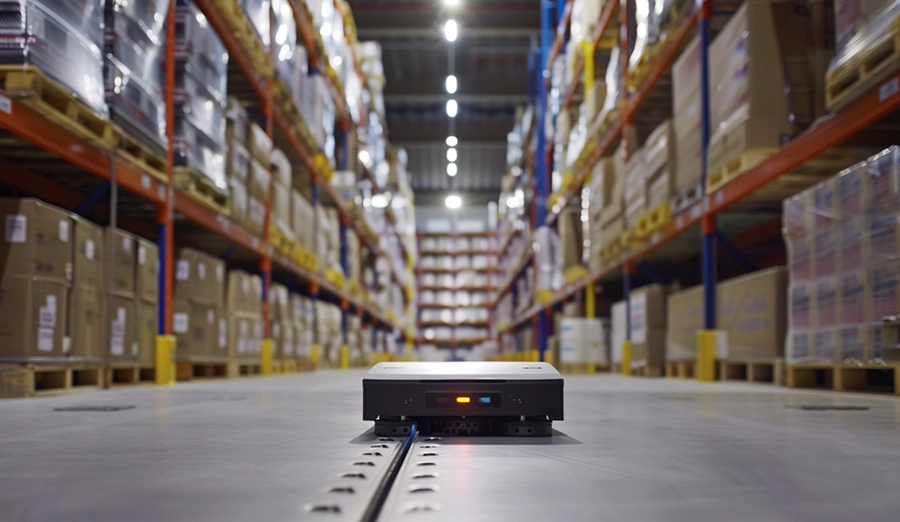



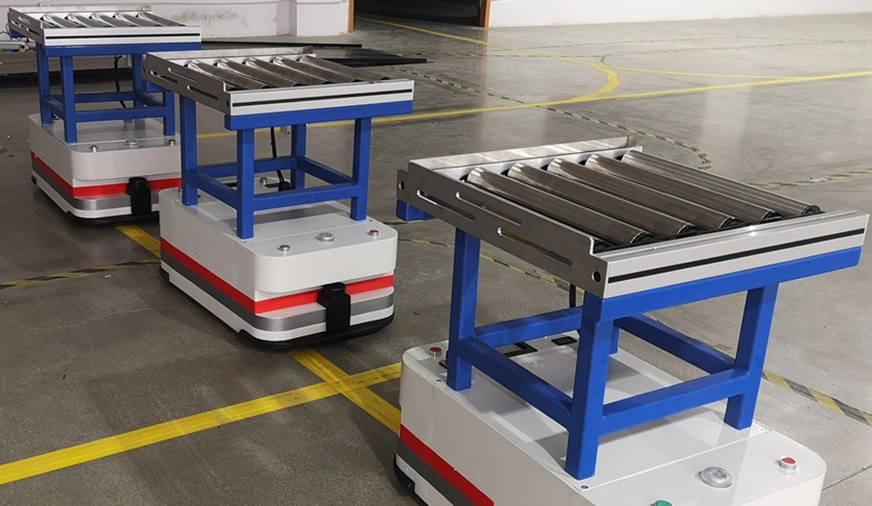
 AGV/AMR Manufacturing Wireless Charging Solution
Inspection Robot Wireless Charging Solution
Mining Explosion-proof Wireless Charging Solution
Service Robot Wireless Charging Solution
Photovoltaic Robot Wireless Charging Solution
Outdoor Cleaning Robot Wireless Charging Solution
 Contact: Ms. Yang
 +86 18678901310
 luyu@wireless-power.com.cn
 801, 8th Floor, Building 1, Huizhiyuan, 117 Huizhiqiao Road, High-tech Zone, Qingdao,China
 WECHAT





 EN
EN

 +86 18678901310