

WIRELESS CHARGING IN THE NEWS
During the design process of mobile robots, engineers often encounter an awkward problem: The functions have been planned, but when they check the available space under the chassis, they find that there is hardly any space left, not even enough to fit a charging module.
This contradiction of "stronger functions, tighter space" becomes increasingly prominent as the integration level of robots increases. Sensors need to be added, batteries need to be large, but the space for the charging module is constantly being compressed. Thus, a problem that should not have been a bottleneck began to emerge: Can the charging solution fit?
The split-type 1200W and 3000W wireless chargers launched by WIRELESSPT Technology Co., Ltd. attempt to provide a new answer to this question. By separating the controller from the coil, this solution significantly lowers the threshold for "fitting in".
The installation freedom brought by the split design
In traditional integrated solutions, the size of the charging module is fixed, and engineers must reserve a complete installation space for it. If this space is not large enough or has an irregular shape, the entire solution may be rejected.
The split design breaks this limitation. The controller can be placed in a relatively spacious position on the vehicle body, while the coil part only retains the most core energy transmission components, and the thickness is compressed to the extent that it can fit into most gaps.
This means that when designing the vehicle body, engineers no longer need to reserve a "special seat" for the charging module. As long as there is a few millimeters of gap, the coil can find a place to fit; as long as there is a relatively flat surface, the controller can find a placement position. The installation of the charging solution has changed from "searching for a complete space" to "utilizing scattered space".
Another possibility for retrofits
For new equipment, space planning can be completed during the design stage. But for a large number of existing equipment that are already in operation, the difficulty of retrofitting is much greater - the chassis structure has been fixed, and there is almost no room for adjustment.
The value of the split design is particularly evident in the scenario of retrofits. A case study of the automation transformation of a port tire crane shows that the chassis space of the original equipment has been occupied by batteries and other components, leaving no complete area for installing an integrated charger. Eventually, engineers embedded the coil of the split product in the remaining gaps on the bottom of the equipment and installed the controller on the side bracket, achieving wireless charging without changing the original chassis structure.
This "fitting in wherever possible" installation method has given equipment that was previously considered un改造able the opportunity to be integrated into the automation system.
From "Can It Be Installed" to "How Can It Be Installed Better"
In the eyes of the engineers at WIRELESSPT, the significance of the split design is not only to solve the problem of "not being able to fit in", but also to provide more thinking dimensions for equipment integrators.
When installation is no longer a limiting factor, engineers can more calmly weigh: Where should the coil be placed to be most beneficial for charging efficiency? Where should the controller be installed for the best maintenance? How should the antenna be arranged for the most stable signal? These questions have changed from the single-choice question of "can it be installed" to the optimization question of "how to install better".
In the manufacturing base with an annual production capacity of 20,000 sets in Yantai, these split-type products are being mass-produced. For mobile robot designers, having an additional installation option means having more design freedom. And this freedom is precisely one of the signs of the maturity of industrial wireless charging technology.
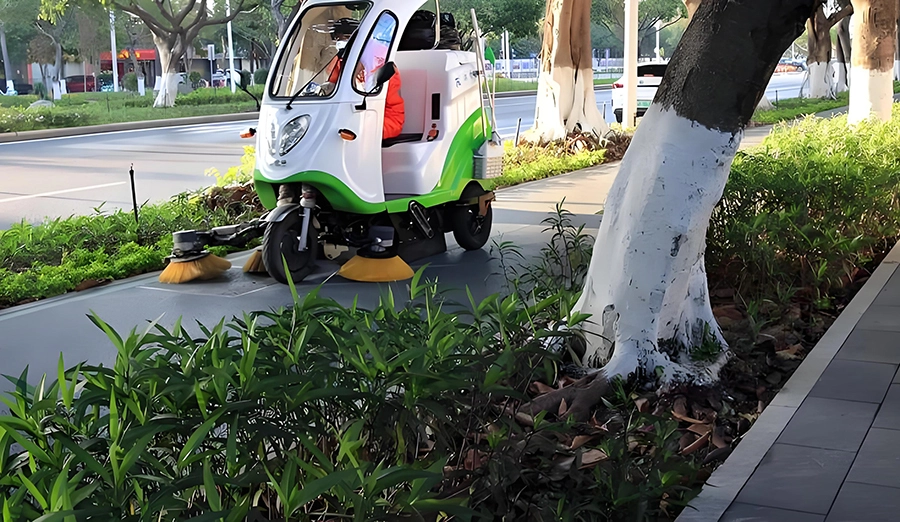


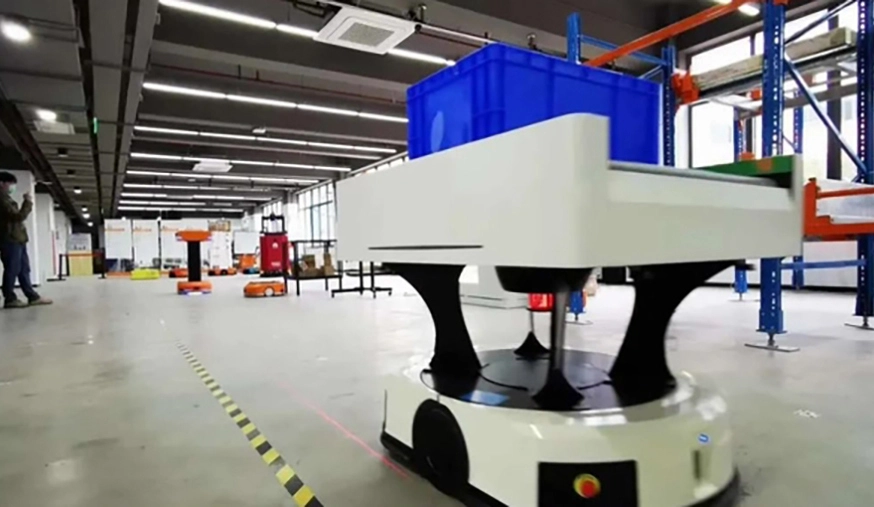

 AGV/AMR Manufacturing Wireless Charging Solution
Inspection Robot Wireless Charging Solution
Mining Explosion-proof Wireless Charging Solution
Service Robot Wireless Charging Solution
Photovoltaic Robot Wireless Charging Solution
Outdoor Cleaning Robot Wireless Charging Solution
 Contact: Ms. Yang
 +86 18678901310
 luyu@wireless-power.com.cn
 801, 8th Floor, Building 1, Huizhiyuan, 117 Huizhiqiao Road, High-tech Zone, Qingdao,China
 WECHAT





 EN
EN

 +86 18678901310